First all-African GM crop is resistant to maize streak virus
Aug 15, 2007
First all-African GM crop is resistant to maize streak virus
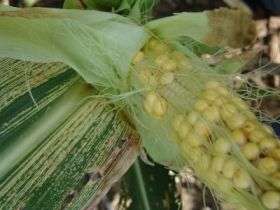
Maize streak virus symptoms in a commercial maize field in Klerksdorp, NorthWest South Africa, showing chlorotic streaking and deformed cob development. This farm grew USA commercial hybrids and experienced almost total yield losses. Credit: Photograph taken in April 2005 by Dr F. Kloppers

The first all-African genetically modified crop plant with resistance to the severe maize streak virus (MSV), which seriously reduces the continent’s maize yield, has been developed by scientists from the University of Cape Town and PANNAR PTY Ltd, a South African seed company.

The research, published in Plant Biotechnology Journal represents a significant advance in African agricultural biotechnology, and will play an important role in alleviating Africa’s food shortages and famine.

Dr Dionne Shepherd, lead researcher explains, “MSV is transmitted to maize by small insects called leafhoppers. The disease is therefore a result of a complex interplay between the plant, the virus and insect. Factors that can influence the severity of the disease include the age at which the plant is infected (the younger the plant, the more severe the infection), the maize variety (some are more susceptible than others), and environmental conditions.

“We have created an MSV-resistant maize variety by genetic engineering, using an approach known as pathogen-derived resistance. This means that a gene from the viral pathogen is used to protect the plant from that pathogen. We mutated a viral gene that under normal circumstances produces a protein that is essential for the virus to replicate itself and inserted it into the maize plant’s genome, creating genetically modified maize. When the virus infects one of these transgenic maize plants, it displays a significant delay in symptom development, a decrease in symptom severity and higher survival rates than non-transgenic plants.”

The next stage of the research involves field trials to ensure that the transformed crop is digestible, that the protein is not an allergen and that it will be ecologically friendly to other organisms within the environment. Following the results of these trials, the crop will be monitored over a number of growing seasons before it is made accessible to local farmers.

Source: Blackwell Publishing

Explore further: Spain and France agree on fishing quota swap

add to favorites email to friend print save as pdf

Related Stories

Lessons from the Italian ban on pesticides

May 03, 2013

Exposure to sub-lethal doses of neonicotinoids may have a long-term effect on bees. One of Italy's top bee researchers recommends a ban on insecticide-coated seeds and in reintroducing rotating cultures against pests invasion.

A new source of maize hybrid vigor

Jun 28, 2012

Steve Moose, an associate professor of maize functional genomics at the University of Illinois and his graduate student Wes Barber think they may have discovered a new source of heterosis, or hybrid vigor, in maize. They ...

Bioluminescent technology for easy tracking of GMO

Apr 30, 2012

It is important to be able to monitor genetically modified (GM) crops, not only in the field but also during the food processing chain. New research published in BioMed Central's open access journal BMC Biotechnology shows ...

A quarter of a century of sweet corn observations

Jan 04, 2012

For more than a quarter of a century, Jerald "Snook" Pataky's research in the University of Illinois Sweet Corn Hybrid Disease Nursery has been helping growers make important decisions to increase their profitability.

Recommended for you

EU bans three pesticides harmful to bees

May 24, 2013

The European Commission said Friday that it will ban for two years beginning in December pesticides blamed for killing the bees that pollinate food and fruit crops.

Studying the Noble King Mackerel

May 24, 2013

They are sometimes called "smokers," due to the speed at which a fishing line zips out the reel and "smokes" after they hit on the bait.

User comments : 0

More news stories