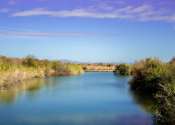
Water resource management methods comprise the systematic planning, allocation, regulation, and monitoring of surface water, groundwater, and related infrastructure to optimize availability, reliability, and quality under hydrological, ecological, and socio‑economic constraints. Core methodological components include hydrologic and hydrogeologic modeling, demand forecasting, reservoir and aquifer operation rules, conjunctive use strategies, environmental flow assessment, and water quality management. They frequently incorporate decision-support tools such as optimization, multi-criteria analysis, and integrated water resources management (IWRM) frameworks, enabling coordination across sectors and scales. Methods also encompass instruments for governance and implementation, including abstraction licensing, allocation regimes, pricing schemes, and adaptive management based on continuous data and performance evaluation.