Neutrons open window to explore space glass
Thanks to human ingenuity and zero gravity, we reap important benefits from science in space. Consider smart phones with built-in navigation systems and cameras.
Neutron techniques encompass a group of experimental methods that use beams of thermal, cold, or fast neutrons to probe the structure, dynamics, and magnetic properties of materials at atomic to mesoscopic length scales. Principal methods include neutron diffraction for crystallographic and magnetic structure determination, small-angle neutron scattering (SANS) for studying nanoscale inhomogeneities, and inelastic or quasielastic neutron scattering for characterizing lattice vibrations, molecular motions, and spin excitations. These techniques exploit the neutron’s charge neutrality, nuclear-specific scattering cross sections, and magnetic moment, enabling high sensitivity to light elements, isotopic contrast variation, and direct measurement of magnetic correlations in condensed-matter, soft-matter, and biological systems.
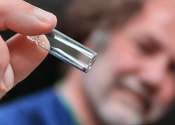
Thanks to human ingenuity and zero gravity, we reap important benefits from science in space. Consider smart phones with built-in navigation systems and cameras.
General Physics
May 21, 2024
6
308

Robots revolutionized the manufacturing industry by automating assembly lines. Now, more and more, they are being used to expedite the pace of scientific discovery.
General Physics
May 14, 2024
0
80

The reactions between protons and lithium isotopes, especially lithium-6, are pivotal for several domains ranging from nuclear energy applications to astrophysics. The detailed understanding of these interactions aids in ...
General Physics
May 7, 2024
0
99

The time-tested strategy of "divide and conquer" took on a new, high-tech meaning during neutron experiments by scientists at the Department of Energy's Oak Ridge National Laboratory. They discovered that the problems they ...
General Physics
Apr 1, 2024
0
144

Improved neutron mirrors can increase the efficiency of material analysis in neutron sources such as the European Spallation Source. The improved mirror has been developed by researchers at Linköping University by coating ...
General Physics
Feb 29, 2024
0
205

Nuclear power is considered one of the ways to reduce dependence on fossil fuels, but how to deal with nuclear waste products is among the issues surrounding it. Radioactive waste products can be turned into more stable elements, ...
General Physics
Feb 16, 2024
0
195

With new generation radioactive-ion beam facilities, previously challenging experiments can be conducted for discovering new isotopes and for revealing physics related to the exotic nuclei far from the β-stability valley, ...
General Physics
Feb 6, 2024
0
138

A feasibility study conducted at CSNS Back-n facility, recently published in Nuclear Science and Techniques, demonstrates a significant prospect of NRTA in nondestructive nuclide identification.
General Physics
Feb 2, 2024
0
74

Self-folding polymers containing gadolinium forming nanosized complexes could be the key to enhanced magnetic resonance imaging and next-generation drug delivery, as demonstrated by scientists at Tokyo Tech. Thanks to their ...
Bio & Medicine
Dec 4, 2023
0
96

Experiments with state-of-the-art scattering instruments reveal an absence of specific patterns in the X-rays scattered by nanocomposite materials. With the help of advanced simulation techniques, a new study suggests that ...
Nanophysics
Jul 17, 2023
0
76
