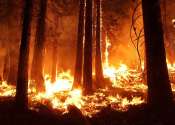
Grassland ecosystems are terrestrial biomes dominated by herbaceous vegetation, primarily grasses (Poaceae), with sparse tree or shrub cover, shaped by climate, fire regimes, soil properties, and large herbivore grazing. They exhibit high belowground biomass and root turnover, playing a major role in carbon sequestration, nutrient cycling, and water regulation. Structurally, grasslands are characterized by open canopies, seasonal productivity pulses, and strong coupling between disturbance and primary production. They support specialized plant–herbivore–microbe interactions, including mycorrhizal associations and grazing-adapted floras, and are central to research on biodiversity maintenance, trophic dynamics, land-use change, and climate–vegetation feedbacks across temperate, tropical, and arid regions.