Scientists test space device to detect elusive dark matter
Scientists are working on an ambitious dark matter experiment in space in the hope it can unravel one of the universe's greatest mysteries.
Cosmic ray and astroparticle detectors comprise experimental techniques and instrumentation designed to measure high-energy particles and radiation originating from space, including charged cosmic rays, gamma rays, neutrinos, and, indirectly, dark matter candidates. Detection methods exploit diverse physical processes such as ionization (gas chambers, silicon trackers), scintillation (organic and inorganic scintillators), Cherenkov radiation (water/ice Cherenkov, air Cherenkov telescopes), and calorimetry (electromagnetic and hadronic calorimeters), often combined in hybrid observatories. These techniques enable reconstruction of particle energy, charge, direction, and composition, support studies of extensive air showers, and underpin astroparticle physics investigations of cosmic accelerators, fundamental interactions at extreme energies, and the high-energy universe’s particle and radiation fields.

Scientists are working on an ambitious dark matter experiment in space in the hope it can unravel one of the universe's greatest mysteries.
Astronomy
Jan 31, 2025
8
76

The LUX ZEPLIN (LZ) Dark Matter experiment is a large research effort involving over 200 scientists and engineers at 40 institutions worldwide. Its key objective is to search for weakly interacting massive particles (WIMPs) ...

As a kid, you may have tried to dig a hole in your backyard to reach China. Obviously, that didn't happen. But digging out a lot of ground can be quite productive. Instead of reaching another country, the scientists, engineers, ...
General Physics
Oct 7, 2024
2
84

Using a specially designed 3D printed vacuum system, scientists have developed a way to "trap" dark matter with the aim of detecting domain walls. This will be a significant step forwards in unraveling some of the mysteries ...
General Physics
Jun 17, 2024
0
194

Deep under the ground at Fermi National Accelerator Laboratory is a brand-new quantum sensor and computing research center called QUIET, and at the surface—100 meters above—sits its twin called LOUD.
General Physics
Jun 7, 2024
0
155

In a new study published inNature Physics, scientists at the MAJORANA Collaboration have tested the stringency of charge conservation and Pauli's exclusion principles using underground detectors. Alessio Porcelli has published ...
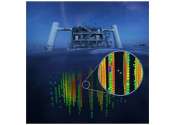
Researchers at the IceCube Neutrino Observatory in Antarctica have found seven signals that could potentially indicate tau neutrinos—which are famously hard to detect—from astrophysical objects.

Researchers at the Large High Altitude Air Shower Observatory (LHAASO) have accurately measured the cosmic ray all-particle energy spectrum and the mean logarithmic mass in the range of 0.3–30 peta-electronvolts (PeV). They ...
General Physics
Apr 8, 2024
0
123

Several thousand sensors distributed over a square kilometer near the South Pole are tasked with answering one of the large outstanding questions in physics: does quantum gravity exist? The sensors monitor neutrinos—particles ...
General Physics
Mar 26, 2024
4
896

Large, low-background detectors using xenon as a target medium are widely used in fundamental physics, particularly in experiments searching for dark matter or studying rare decays of atomic nuclei. In these detectors, the ...
General Physics
Jan 17, 2024
0
90
