Page 4: Research news on Biological networks

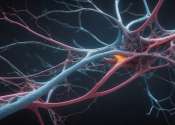
Biological networks, as physical systems, comprise interconnected biomolecular or cellular components whose interactions give rise to emergent functional organization in living organisms. They include gene regulatory, protein–protein interaction, metabolic, neuronal, and signaling networks, each instantiated by tangible entities such as DNA, proteins, metabolites, or cells and their spatially constrained contacts. These systems exhibit nontrivial topology (e.g., modularity, hubs, motifs) and dynamic behavior governed by biochemical reaction kinetics, diffusion, and mechanical coupling. Biological networks underpin robustness, adaptability, and information processing in cells and tissues, and are quantitatively studied using tools from statistical physics, nonlinear dynamics, and network theory.

3D printing near net shape parts with no post-processing

Carnegie Mellon University Professor Rahul Panat, and his team, were developing a new type of 3D printed Brain-Computer Interface (or BCI) device where custom micropillars capture the communication signals from neurons when ...

Researchers chart future of nucleic acid nanotechnology

Trapped in a microscopic cage made of strands of DNA, molecules of a life-saving drug course through the bloodstream of a cancer patient. Only when receptors on the strands sense they've arrived at the right location—cancer ...

page 4 from 4