Page 36: Research news on bacteria

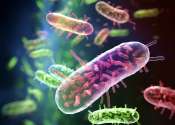
Bacteria are a major domain of prokaryotic microorganisms characterized by the absence of a membrane-bound nucleus, typically possessing a single circular chromosome, 70S ribosomes, and peptidoglycan-containing cell walls. They exhibit diverse morphologies (e.g., cocci, bacilli, spirilla) and metabolic strategies, including aerobic, anaerobic, phototrophic, chemolithotrophic, and heterotrophic lifestyles. Bacteria reproduce primarily by binary fission and undergo extensive horizontal gene transfer via transformation, transduction, and conjugation, driving rapid adaptation. They occupy virtually all ecological niches, form complex communities such as biofilms, and play central roles in biogeochemical cycles, host-associated microbiomes, biotechnology, and pathogenesis research.

Phages with fully-synthetic DNA can be edited gene by gene

A team led by University of Pittsburgh's Graham Hatfull has developed a method to construct bacteriophages with entirely synthetic genetic material, allowing researchers to add and subtract genes at will. The findings open ...

Understanding how bacteria use 'sunscreen' to adapt to climate

Cyanobacteria, commonly known as blue-green algae, are found almost everywhere in the world—from hot springs to arctic ice to antioxidant smoothies. Part of their extreme adaptability lies within a unique light-harvesting ...

page 36 from 40