Research news on bacteria

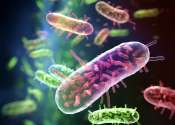
Bacteria are a major domain of prokaryotic microorganisms characterized by the absence of a membrane-bound nucleus, typically possessing a single circular chromosome, 70S ribosomes, and peptidoglycan-containing cell walls. They exhibit diverse morphologies (e.g., cocci, bacilli, spirilla) and metabolic strategies, including aerobic, anaerobic, phototrophic, chemolithotrophic, and heterotrophic lifestyles. Bacteria reproduce primarily by binary fission and undergo extensive horizontal gene transfer via transformation, transduction, and conjugation, driving rapid adaptation. They occupy virtually all ecological niches, form complex communities such as biofilms, and play central roles in biogeochemical cycles, host-associated microbiomes, biotechnology, and pathogenesis research.

Q&A: How can microbiome science solve problems in agriculture?

Decades of research has shown promise for using microbiome science to solve several problems facing agriculture, but these findings have not yet been translated to practical recommendations for growers, according to a team ...

page 1 from 35