Page 8: Research news on avian influenza

Avian influenza is a group of infectious diseases in birds caused by avian-adapted influenza A viruses (Orthomyxoviridae), characterized by segmented, negative-sense, single-stranded RNA genomes and diverse hemagglutinin (H) and neuraminidase (N) subtypes. Strains are classified as low or highly pathogenic based on molecular determinants, particularly in the hemagglutinin cleavage site, and associated clinical severity in poultry. Research topics include viral ecology in wild waterfowl reservoirs, transmission dynamics at the wildlife–poultry–human interface, molecular evolution and reassortment, host-range restriction mechanisms, immune escape, and risk assessment for zoonotic spillover and pandemic potential.

Analysis reveals H5N1 mutations linked to human adaptive potential

In recent years, there has been growing concern over the H5N1 influenza virus. It was first identified in birds three decades ago and has now gradually found its way to humans. H5N1 is a strain of the influenza virus harboring ...

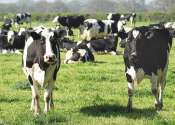
Avian flu has major economic costs for dairy industry

A new paper from a team of Cornell University researchers shows that the highly pathogenic avian influenza H5N1 virus causes severe mastitis and decreased milk production in dairy cows, a drop-off that may extend beyond the ...

With AI, researchers find increasing immune evasion in H5N1

The H5N1 avian influenza virus has infected birds and mammals around the world. As of June 2025, 70 people have been infected, and one person has died in the United States. A new analysis suggests that the virus is evolving ...

page 8 from 9