Page 8: Research news on air quality

Air quality, as a phenomenon, refers to the physicochemical state of the atmosphere with respect to the presence, concentration, and reactivity of gaseous and particulate constituents, including criteria pollutants (e.g., ozone, nitrogen oxides, sulfur dioxide, carbon monoxide, particulate matter) and numerous hazardous air pollutants. It emerges from dynamic interactions among emission sources, atmospheric transport, dispersion, chemical transformation, and removal processes such as deposition and scavenging. Quantification of air quality relies on continuous or episodic monitoring, expressed through pollutant concentrations and composite indices, and is central to studying atmospheric chemistry, exposure assessment, and the impacts of atmospheric composition on biological, ecological, and material systems.

How does wildfire smoke affect the economy?

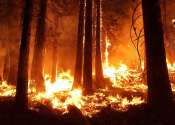
Wildfires in the United States are getting bigger, and the season is getting longer, fueled by hotter and drier weather from climate change. Even when fires are hundreds of miles away, wildfire smoke can still harm people's ...

page 8 from 40