Minneapolis air quality ranked among the world's worst on August 2
Minneapolis had the fifth worst air quality among 125 cities worldwide on Saturday morning, according to an international air quality monitoring platform.
Air quality, as a phenomenon, refers to the physicochemical state of the atmosphere with respect to the presence, concentration, and reactivity of gaseous and particulate constituents, including criteria pollutants (e.g., ozone, nitrogen oxides, sulfur dioxide, carbon monoxide, particulate matter) and numerous hazardous air pollutants. It emerges from dynamic interactions among emission sources, atmospheric transport, dispersion, chemical transformation, and removal processes such as deposition and scavenging. Quantification of air quality relies on continuous or episodic monitoring, expressed through pollutant concentrations and composite indices, and is central to studying atmospheric chemistry, exposure assessment, and the impacts of atmospheric composition on biological, ecological, and material systems.

Minneapolis had the fifth worst air quality among 125 cities worldwide on Saturday morning, according to an international air quality monitoring platform.
Environment
Aug 4, 2025
0
36

Chinese air quality improvements are likely to have contributed to accelerated global surface temperature warming, according to a research paper, with the Asian landmass warming at twice the global average.
Environment
Jul 31, 2025
1
95

Canada is facing another dangerous wildfire season, with burning forests sending smoke plumes across the provinces and into the U.S. again. The pace of the 2025 fires is reminiscent of the record-breaking 2023 wildfire season, ...
Environment
Jul 28, 2025
0
36

Efficient stoves not only reduce CO₂ emissions and conserve valuable resources, but their use also leads to better indoor air quality and potentially reduces health risks, especially for women. This is shown in a study conducted ...
Environment
Jul 23, 2025
0
17

The Trump administration is decreasing the attention federal regulators pay to pipeline leaks. But leaks from natural gas pipelines don't just waste energy and warm the planet—they can also make the air more dangerous to ...
Environment
Jul 22, 2025
0
39

Bulldozer activity involving coal at an open-air facility at the Port of Baltimore is closely linked to air pollutants in the adjacent neighborhood of Curtis Bay, according to a community-driven study co-led by researchers ...
Environment
Jul 21, 2025
0
24

Heat waves are becoming more frequent around the world. And while rising temperatures caused by greenhouse gas emissions are part of the problem, the declining levels of aerosols—the small particles that make up smog and ...
Environment
Jul 16, 2025
2
105

Households are being warned about the dangers of wood-burning stoves, including modern eco-design models, as a new study by the University of Surrey's Global Center for Clean Air Research (GCARE) has found that the use of ...
Environment
Jul 15, 2025
1
191
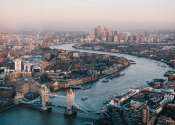
Air pollution across the UK dropped between 2015 and 2024, but dangerous levels are still reached too often, shows new research published in Environmental Science: Atmospheres.
Environment
Jul 15, 2025
0
21

Carbon emissions continue to increase at record levels, fueling climate instability and worsening air quality conditions for billions in cities worldwide. Yet despite global commitments to carbon neutrality, urban policymakers ...
Environment
Jul 14, 2025
0
29
