Page 2: Research news on Accelerator subsystems

Accelerator subsystems are the distinct, functionally specialized physical systems that collectively enable the generation, manipulation, acceleration, guidance, and delivery of charged particle beams in particle accelerators. Typical subsystems include the injector and source assemblies, radio-frequency (RF) accelerating structures, magnet lattices (dipoles, quadrupoles, higher-order multipoles), vacuum systems, beam diagnostics and instrumentation, power supplies, cooling and cryogenic infrastructure, radiation shielding, and control systems. Each subsystem exhibits tightly constrained electromagnetic, mechanical, and thermal properties, and their integrated performance determines beam quality parameters such as emittance, energy spread, luminosity, and stability in research, medical, and industrial accelerator facilities.

Oxygen tweaking may be key to accelerator optimization

Particle accelerators are pricey, but their cost comes with good reason: These one-of-a-kind, state-of-the-art machines are intricately designed and constructed to help us solve mysteries about what makes up our universe. ...

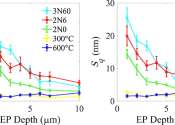
Smoother surfaces make for better accelerators

With every new particle accelerator built for research, scientists have an opportunity to push the limits of discovery. But this is only true if new particle accelerators deliver the desired performance—no small feat in a ...

Successful test paves the way for magnet production at CERN

The Large Hadron Collider (LHC) needs specific types of magnets to tightly control the beams of particles at its collision points. Called final-focusing quadrupoles, these magnets are installed in the LHC's interaction regions ...

page 2 from 2