Boron Nitride Nanotubes More Amenable Than Carbon
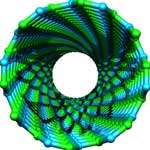
Carbon nanotubes get a lot of press attention, but boron nitride (BN) nanotubes might have superior properties. K.H. Khoo and his colleagues form University of California performed first-principles calculations on BN nanotubes in the presence of a transverse electric field and found that these systems exhibit dramatic decrease in band gap when subject to strong fields. This effect should be realizable experimentally for the 5 nm or more diameter BN nanotubes, and it may be very important for tuning the band gap of BN nanotubes for practical applications.
Boron nitride is a binary chemical compound, consisting of equal proportions of boron and nitrogen, with composition BN. Structurally, it is isoelectronic to carbon and takes on similar physical forms: a graphite-like one, and a diamond-like one. The latter is the only material nearly as hard as diamond. Boron nitride is stable at air to approx. 1000°C, under reduced conditions or inert gases it can be used up to 1800°C.
Boron is one to the left on the periodic table from carbon and nitrogen is one to the right. Therefore, it is not surprising that a graphene-liek lattice can be synthesized from alternating boron and nitrogen atoms. However, different from their carbon analogues, boron nitride nanotubes are wide-gap semiconductors with a quasiparticle band gap of about 5.5 eV.
Boron nitride is far more resistant to oxidation than carbon and therefore suited for high temperature applications in which carbon nanostructures would burn. Moreover, BN nanotubes electronic properties are independent of tube diameter and number of layers, unlike tubes made of carbon, making BN nanotubes much more amenable: by doping these tubes, it is conceivable to have devices on single BN tubes which have diameters on the order of nanometers and lengths on the order of microns.
The range of applications (e.g., in optoelectronic devices) of these boron nitride nano-tubes would be greatly extended if their band gap can be tuned to desired values in a controlled way.
Practically, a nanotube on an insulating substrate can be subjected to a strong transverse electric field through an applied gate voltage. Such systems are prototype nanoscale field effect transistors.
Authors performed calculations on boron nitride nanotubes that show that the band gap of boron nitride nanotubes can be greatly reduced by a transverse electric field. For BN nanotubes of diameters of 5 nm or more, a sizable gap reduction should be achievable with laboratory fields. This effect provides a possible way to tune the band gap of BN tubes for various applications.
Read more details of their work in the last issue of Physical Review B (69, 201401(R), 2004).


