Testing how well chemical cells work could provide answer to recognising life
Oct 27, 2006
Testing how well chemical cells work could provide answer to recognising life

A test to see how well manmade chemical 'cells' can pass themselves off as the real thing could help scientists solve the problem of defining when something is alive, say researchers writing in this month’s issue of Nature Biotechnology.

Work to build chemical cells, known as 'chells', which are made using chemical components and act just like cells in plants or animals, is in the very early stages of development. Scientists hope one day to develop a man-made chemical system which carries information, replicates and sustains itself like a biological cell, and which is – to all intents and purposes – alive. To do this they will need a method to test how life-like their cell is.

The team, including Dr Joachim H. G. Steinke from Imperial College London's Department of Chemistry, suggests that the best way to do this is to test if the manmade cell can be detected as a 'fake' when it is set up to interact with natural biological cells.

The researchers show how this kind of test could work in the same way as the so-called 'Turing test' which is used in artificial intelligence to ascertain if a computer is capable of successfully imitating thought. The Turing test is also known as an 'imitation game', and involves a person communicating with both another person and a computer using an instant messaging service: if the first person cannot distinguish between the human and the computer from their responses, the computer is said to have successfully imitated thought.

The researchers envision applying this idea to testing the quality of manmade chemical cells by setting up a test where a manmade chemical cell and a regular biological cell have to interact with a second biological cell. If the chemical cell has been successfully built, it should be able to 'fool' the second biological cell into interacting with it in exactly the same way as it does with the normal cell.

Dr Steinke explains: "This kind of test will play a vital role in assessing how effectively scientists' attempts to build a workable chemical cell are progressing, but it could also help to advance our understanding of the meaning of life, or at least of what life is not. In effect, if we can build a cell which behaves so much like a regular cell that even another cell cannot tell it’s a fake, then you could argue that we would have created an artificial cell that is 'alive'."

The team hope that in the future chemical cells will be built that can do things their biological equivalents cannot, since these 'chells' will not be constrained by the limitations of biological systems, such as only working at certain temperatures.

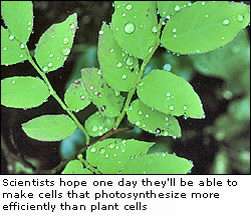
"One of many possible future uses for this kind of chemistry would be to create a functioning 'chell' which converts sunlight into chemical energy much more efficiently than plant cells, which are only 1-2 per cent efficient," adds Dr Steinke.

Source: Imperial College London

Explore further: Cradle turns smartphone into handheld biosensor

add to favorites email to friend print save as pdf

Related Stories

How nanotechnology could keep your heart healthy

May 17, 2013

Since the heart is such a delicate and critical organ, clinicians usually opt not to intervene with the dead cells that remain after a heart attack or cardiac disease. "But we think that all heart attacks deserve some kind ...

Mars Icebreaker Life mission

May 16, 2013

Missions to Mars have only scratched its surface. To go deeper, scientists are proposing a spacecraft that can drill into the Red Planet to potentially find signs of life.

Engineers monitor heart with paper-thin flexible 'skin'

May 15, 2013

(Phys.org) —Engineers combine layers of flexible materials into pressure sensors to create a wearable heart monitor thinner than a dollar bill. The skin-like device could one day provide doctors with a ...

Recommended for you

Cradle turns smartphone into handheld biosensor

1 hour ago

(Phys.org) —Researchers and physicians in the field could soon run on-the-spot tests for environmental toxins, medical diagnostics, food safety and more with their smartphones.

Unspooling DNA from nucleosomal disks

4 hours ago

The tight wrapping of genomic DNA around nucleosomes in the cell nucleus makes it unavailable for gene expression. A team of Ludwig-Maximilians-Universitaet (LMU) in Munich now describes a mechanism that allows chromosomal ...

Chemists find new compounds to curb staph infection

6 hours ago

(Phys.org) —In an age when microbial pathogens are growing increasingly resistant to the conventional antibiotics used to tamp down infection, a team of Wisconsin scientists has synthesized a potent new ...

User comments : 0

More news stories

Chemists find new compounds to curb staph infection

(Phys.org) —In an age when microbial pathogens are growing increasingly resistant to the conventional antibiotics used to tamp down infection, a team of Wisconsin scientists has synthesized a potent new ...

NASA head views progress on asteroid lasso mission

Surrounded by engineers, NASA chief Charles Bolden inspected a prototype spacecraft engine that could power an audacious mission to lasso an asteroid and tow it closer to Earth for astronauts to explore.

Solar Kettle allows for boiling water off the grid

(Phys.org) —A company called Contemporary Energy has unveiled a new device it calls the Solar Kettle. It looks very much like a normal coffee thermos, but has flaps on one side that open to allow for collecting ...

Ferrets, pigs susceptible to H7N9 avian influenza virus

Chinese and U.S. scientists have used virus isolated from a person who died from H7N9 avian influenza infection to determine whether the virus could infect and be transmitted between ferrets. Ferrets are often used as a mammalian ...

Scientists develop cheaper, more efficient fuel cells

(Phys.org) —Using the Canadian Light Source (CLS) synchrotron, researchers have discovered a way to create cheaper fuel cells by dividing normally expensive platinum metal into nanoparticles (or even single ...