Scientists Reveal How Signals Travel Through Rats' Whiskers
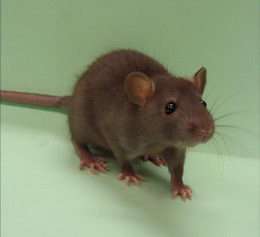
Like blind peoples’ fingers, rats use their whiskers to engage in active sensing – a combination of movement and touch – when trying to figure out the location and identity of a certain object. But how the brain decodes the signals it receives from the whiskers is unclear.
Ph.D. student Chunxiu Yu, working together with colleagues Dori Derdikman and Dr. Sebastian Haidarliu in the laboratory of Prof. Ehud Ahissar of the Weizmann Institute's Neurobiology Department, have now provided surprising new insights into the mechanisms involved, suggesting that the signals travel from the whiskers through three distinct regions in the thalamus – a central gateway of the brain – along three separate pathways: One conveying signals relating to whisker movement; the second conveying touch signals (providing information on where an object is); and the third conveying complex combinations of movement and touch signals (providing information on what the object is).
They propose that these pathways function within three parallel feedback loops that control various aspects of sensor movements much like thermostats controlling temperature – by constantly monitoring the signals they receive and changing their responses accordingly.
The authors suggest that these separate pathways work in parallel on different levels of a brain hierarchy, with the higher, more complex levels (object identification) building on the lower levels (movement and touch) to implement new behaviors.
Prof. Ehud Ahissar’s research is supported by the Nella and Leon Benoziyo Center for Neurosciences; the Carl and Micaela Einhorn-Dominic Institute for Brain Research; the Edith C. Blum Foundation; the Irving B. Harris Foundation; and Ms. Esther Smidof, Switzerland. Prof. Ahissar is the incumbent of the Helen Diller Family Professorial Chair in Neurobiology.
Source: Weizmann Institute of Science


