Japan eyes moon colonized by robots
Apr 13, 2006
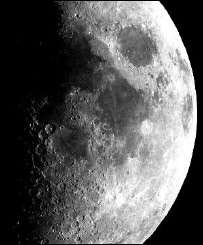
Earth\'s Moon

Japan plans to send robots to explore and set up a base on the moon, possibly within the next 10 years, officials said.

The Japan Aerospace Exploration Agency has formed a team of researchers to promote the exploration of the moon and planets in the solar system using robots. The agency also established a team specializing in the development of technology for the lunar-based robots, the Asahi Shimbun reported Thursday.

Japan will develop advanced robots which can operate exploration vehicles and make decisions on their own to build a base on the moon.

The exploration vehicles will be sent to the moon within 10 years, and the base completed within 20 years, officials said.

The agency also plans to launch the satellite Selene next year to orbit the moon.

Copyright 2006 by United Press International

Explore further: Some potentially habitable planets began as gaseous, Neptune-like worlds

add to favorites email to friend print save as pdf

Related Stories

What other worlds have we landed on?

Jan 14, 2015

Think of all the different horizons humans have viewed on other worlds. The dust-filled skies of Mars. The Moon's inky darkness. Titan's orange haze. These are just a small subset of the worlds that humans ...

Will we mine asteroids?

Jan 09, 2015

It's been said that a single asteroid might be worth trillions of dollars in precious rare metals. Will we ever reach out and mine these space rocks? How hard could it be?

Space exploration promises to be spectacular in 2015

Jan 06, 2015

There is no doubt that 2014 was a fantastic year for planetary sciences – the high points were the successful landing of Philae on comet 67P, the discovery of methane by the Curiosity rover on Mars and ...

Scientist tackles mystery of ancient astronomical device

Jan 06, 2015

The shoebox-size chunk of bronze didn't attract much attention when divers retrieved it from an ancient shipwreck off the Greek island of Antikythera in 1901. Archaeologists on the expedition had their hands ...

Recommended for you

NASA engineer advances new daytime star tracker

5 hours ago

Scientists who use high-altitude scientific balloons have high hopes for their instruments in the future. Although the floating behemoths that carry their instruments far into the stratosphere can stay aloft ...

Image: Sounding rockets launch into an aurora

6 hours ago

The interaction of solar winds and Earth's atmosphere produces northern lights, or auroras, that dance across the night sky and mesmerize the casual observer. However, to scientists this interaction is more ...

Gully patterns document Martian climate cycles

6 hours ago

Geologists from Brown University have found new evidence that glacier-like ice deposits advanced and retreated multiple times in the midlatitude regions of Mars in the relatively recent past.

Europe to resume satnav launches in March: Arianespace

6 hours ago

Europe in March will resume satellite launches for its troubled Galileo navigation system, hoping to boost by at least six the number of orbiters this year, Arianespace and the European Commission said Wednesday.

User comments : 0

Please sign in to add a comment. Registration is free, and takes less than a minute. Read more

Click here to reset your password.
Sign in to get notified via email when new comments are made.