ENGINEER TO DEVELOP NAVIGATION SYSTEM FOR NEXT MARS MISSION
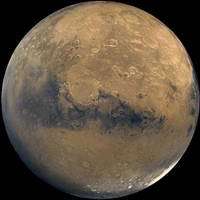
Even as the current Mars rovers continue to log extra miles over the red planet’s surface, NASA is planning for the next generation rover to travel even farther. Ohio State University navigation software may help make that happen.
The National Aeronautics and Space Administration originally hoped that its rovers Spirit and Opportunity would survive long enough to travel at least half a mile each. Now the space agency has awarded Ohio State engineer Ron Li and his team nearly $900,000 to develop tools that will enable the next-generation rover to travel at least three miles.
Other research teams around the country have received an initial round of funding as well. Future field tests will determine which team will help build the control system for the Mars Science Laboratory (MSL), set to launch in 2009.
Li, professor of civil and environmental engineering and geodetic science, and his colleagues have already developed navigation software that is being used on the current Mars mission. They will take those same computer algorithms and adapt them to suit the kind of autonomous rover that NASA plans to deploy for the MSL.
That mission will feature a single rover, larger than Spirit and Opportunity and packed with new tools. It will be able to take samples from the Martian surface and analyze them on board.
Mission navigation will be more complicated, too. Right now, NASA directs the rovers through both autonomous and manual controls, calculating day-to-day movements using data from the rovers and software including Li’s. But the MSL rover is expected to plan its routes much more independently.
“The new mission will be more difficult,” Li said. “One of our biggest challenges will be automating the data processing so the rover can do its own mapping and localization in real time.”
He’ll be working with Kaichang Di, researcher at Ohio State; Larry Matthies and Reg Willson, both scientists at NASA’s Jet Propulsion Laboratory; and Ray Arvidson, professor of earth and planetary sciences at Washington University at St. Louis.
In two to three years, NASA will re-evaluate the technologies developed within the space agency and by the current awarded research teams -- including Carnegie Mellon University, Stanford University, and other institutions -- and select technologies to support future missions.
In the meantime, Li will continue his role on the science team for the current mission, where both rovers have exceeded engineers’ expectations. So far, Spirit has traveled more than two miles, and Opportunity nearly one mile.
Source: Ohio State University


