LG Electronics applies the innovative nano technology to its home appliances
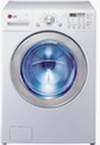
Nano Silver Washing Machine
LGE has successfully applied this innovative technology in creating better home appliances. Through LGE’s pioneering efforts in applying nano technology to its plasmas air conditioners, side-by-side refrigerators, CYKING vacuum cleaner and Front loading washing machines, customers around the world are to be assured of a healthier household.
Applying the attributes of silver (anti-bacteria) and carbon (deodorization) nano particles, LG provides a frontloaded washing machine with a washing tub coated by silver nano particles (Ag+).
The antibacterial properties of these silver nano particles have enabled LG to secure approval for quality and safety from accredited bodies, such as the U.S. FDA, U.S. EPA, SIAA of Japan, and Korea's Testing and Research Institute for Chemical Industry and FITI Testing & Research Institute. The silver nano particles provide antibacterial action and sterilization to clothes and water during the washing and rinsing processes. When clothes are washed and rinsed, the bacteria contained in the water are sterilized as they come into direct contact with the silver nano particles on the surface of the washing tub. As a result, using the LG washing machine provides antibacterial and sterilization benefits for doing laundry.
The dust case of LG CYKING (a cyclonic bagless vacuum cleaner) with nano-sized silver particles coated and melted in keeps various bacteria from breeding. Therefore, this product is especially useful to the health-conscious customer thanks to this anti-bacteria silver-contained case as well as the paperbagless feature.
LGE’s air conditioners run on a healthful nano plasma air-purifying system, which applies a type of carbon nano technology called the carbon nano ball. The carbon nano ball is a nano ball structure (200~500 nm) consisting of nano-sized carbon particles, which have been attached to the interior of the air conditioners. The carbon particles enable these home appliances to effectively absorb odor particles that cause stench and a bad smell.
Bio silver and Bio shield with nano-size silver particles coat the interior of LG side by side refrigerator (Bio silver) and the gasket (Bio shield) of the refrigerator. This prevents the intrusion of bacteria from the external environment. The application of the bio-silver and bio
-shield technologies in LG refrigerators have received endorsements from public accreditation agencies such as the U.S. FDA and EPA, the ISO, and Japan’s SIAA. In addition, a nano-carbon deodorizing feature of the Carbon Nano Ball has also been applied to LG’s refrigerators to
enhance the elimination of odors.
The nano-technology applied home appliance of LG Electronics such as side by side refrigerators, CYKING vacuum cleaners, and nano plasma air conditioners have been put in markets of many countries.
And local LG companies are studying a market opportunity for yet-to-launch products overseas.
(Please localize this part. It is true that the nano technology is adopted into LG products in various overseas markets but the technology for washing machine is yet to apply to global products. It is applied for now only in Korean market.)
The original press release can be found here.


