Travelling to Mars in your dreams?
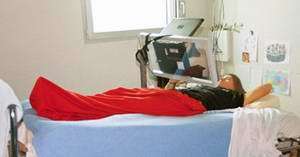
Can you imagine spending eight weeks in bed? ESA is looking for female volunteers who are prepared to do just that for a study taking place in Toulouse, France, from the end of February next year.
If you are a woman aged 25 to 40, a non-smoker, of good health, and strongly motivated to face the challenge of 60 days spent in a horizontal position, then you could be what ESA is looking for to take part in the Women International Space Simulation for Exploration (WISE) study.
The study is a joint venture between the European Space Agency (ESA), the French space agency CNES, the Canadian Space Agency (CSA) and the U.S. National Aeronautics and Space Administration (NASA).
Six degrees below horizontal
For two months, 24 women will stay in bed with their heads tilted down slightly six degrees below horizontal. Every single activity will have to be done in this position, but the specialised bed rest facility at the Institute for Space Medicine and Physiology (MEDES) is well equipped for horizontal living and nurses will be on hand to help if needed.
With rooms shared between two, each volunteer will have a TV, a laptop with Internet access and a telephone. Meals will be served bedside, and shower rooms with special plastic coated beds, mean that personal hygiene remains personal.
Countermeasures
For the volunteers it could be an ideal chance to catch up on reading, learn a new language, or just de-stress and reflect on life. For the scientists involved in the study it is an opportunity to find out more about the effects of long-term space travel on the female body.
Lying in this position for an extended period triggers physiological changes, such as bone and muscle loss as well as changes in blood pressure and heart rate, similar to those experienced by astronauts during prolonged stays in space.
"The first few days can be uncomfortable as your body gets used to the new situation," warns Dr Laurent Braak, Director of MEDES. "Initially, just like astronauts when they first reach space, some people can experience headaches and lower back pain." A team of doctors, nurses, physiotherapists, psychologists and dieticians will be on hand to closely monitor all the volunteers throughout.
The study will assess the roles of nutrition and combined physical exercise in countering the physiological changes. Scientists will be looking to optimise existing countermeasures already used by astronauts during a lengthy stay in space and to develop countermeasures specifically for female astronauts.
On to Mars
"This is a unique opportunity to be a pioneer in space research for future long-duration human spaceflights," explains Dr Peter Jost, ESA's project manager for the WISE study. "The knowledge we gain from the study will directly help the health and wellbeing of astronauts. Ultimately the volunteers will help humans to travel beyond the International Space Station and on to Mars. Here on Earth the findings could also contribute to improved recovery methods for patients confined to bed."
Other benefits for health include new knowledge on medical conditions linked to a sedentary lifestyle. Such conditions are common in industrialised countries and the findings could provide significant arguments for leading a more healthy life.
Challenge
As with astronaut selection, a series of psychological tests are an important part of the selection process. "It could be tough at times and we need women who are prepared to take on the challenge and see the study through to the end," explains Dr Jost. "But,” he adds, “we will do our best to help make the participants feel at home."
For more information about the WISE study, subject requirements and details of how to apply see: http: //www.medes.fr/ltbrw
Source: ESA


