Animals successfully re-learn smell of kin after hibernation
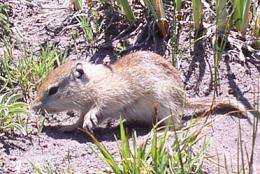
(PhysOrg.com) -- Animals can re-establish their use of smell to detect siblings, even following an interruption such as prolonged hibernation, research at the University of Chicago on ground squirrels shows.
Smell is an important animal survival tool. Female ground squirrel sisters, for instance, bond in groups for protection and use smell to recognize each other. Animals also need to recognize siblings to avoid inbreeding, which would have a negative effect on their genetic fitness, said Jill Mateo, Assistant Professor in Comparative Human Development at the University.
The research on how animals recognize kin is vital to helping plan conservation programs for endangered species, Mateo said in the presentation, "Sex and Smells: Kin Recognition, the Armpit Effect and Mate Choice," Friday, Feb. 13 at the annual meeting of the American Association for the Advancement of Science.
"Understanding kin recognition memory systems, or templates, is important to studying habitat selection, food choice, social bonds and mate preferences. It also is important to understand the degree of plasticity in these templates," she explained.
"Knowledge of how long individuals maintain memories of familiar kin and non-kin is important for the design of captive-breeding programs and for the release of endangered species into the wild," she said. The information can help scientists organize groups of animals who would more successfully adapt to a natural environment after they were reintroduced from captivity.
For her study, Mateo live-trapped pregnant Belding's ground squirrels at a research laboratory in California near Yosemite National Park. The squirrels are native to alpine and sub-alpine habitats. After birth, she mixed litters so that pups were raised with their siblings as well as foster pups.
In the spring, at about 25 days of age, 32 juveniles and their mothers were transferred to large outdoor enclosures, where unrelated litters were introduced to serve as potential social partners. Unfamiliar littermates were placed in separate enclosures.
In the fall, the juveniles were taken to a laboratory, where they were placed in cages and began a hibernation period from November to April. Mateo then collected samples of the animals' odors on plastic cubes and tested the animals to determine their interest in smells from their siblings as well as their foster siblings.
"Yearlings investigated odors of their littermates significantly longer than odors of their foster mates, both of which they were reared with as pups," said Mateo, which showed that they had lost the memory of the smell of the foster pups with whom they had been raised. During the previous summer, they had learned and responded to the smells of both their birth and foster siblings.
The findings show that pups lost memories of both smells, but were able to reconnect with the littermates because they compared their smells to their own, a process colloquially called the 'armpit effect.'
The re-established recognition helps siblings successfully compete for survival in their environment, she said.
Provided by University of Chicago


