Edible fungus foils dangerous grapefruit-drug interactions
Feb 02, 2009
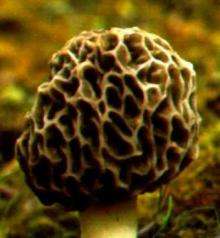
An edible fungus added to grapefruit juice could reduce side effects people have when drinking that juice while taking prescription drugs, scientists report. Credit: Royal Botanic Gardens, Melbourne

Scientists in Florida report that adding an edible mushroom-like fungus to grapefruit juice may help to reduce the serious side effects that can occur when people taking certain prescription drugs drink grapefruit juice. Their study is in the January 14 edition of the ACS' bi-weekly Journal of Agricultural and Food Chemistry.

In the study, Kyung Myung and colleagues explain that furanocoumarins (FCs) — chemicals found in grapefruit and some other citrus — block a key enzyme critical for metabolizing, or breaking down, certain prescription medications. This "grapefruit/drug" interaction — sometimes called the "grapefruit effect" — can turn normal drug doses into toxic overdoses. Researchers have tried to remove FCs using chemical, physical and microbiological methods. Myung and colleagues, for example, had previously discovered that an inedible fungus can be used to remove most of the FCs from grapefruit juice.

Now they report that the edible fungus Morchella esculenta, which is from the same major fungal group as the previously tested inedible fungus, removed most of the furanocoumarins from the grapefruit juice. It also reduced grapefruit juice's inhibition of the enzyme by 60 percent. Dried M. esculenta also worked, leading the researchers to suggest that it could be useful in removing the compound from grapefruit juice and identifying the specific components in the fungi that bind to furanocoumarins.

Article: "Removal of Furanocoumarins in Grapefruit Juice by Edible Fungi", pubs.acs.org/stoken/presspac/presspac/full/10.1021/jf802713g

Source: ACS

Explore further: Making ice-cream more nutritious with meat left-overs

add to favorites email to friend print save as pdf

Related Stories

Grapefruit juice boosts drug's anti-cancer effects

Apr 20, 2009

In a small, early clinical trial, researchers at the University of Chicago Medical Center have found that combining eight ounces of grapefruit juice with the drug rapamycin can increase drug levels, allowing lower doses of ...

Eating berries may lower risk of Parkinson's

Feb 14, 2011

New research shows men and women who regularly eat berries may have a lower risk of developing Parkinson's disease, while men may also further lower their risk by regularly eating apples, oranges and other sources rich in ...

Recommended for you

Non-wetting fabric drains sweat

16 hours ago

(Phys.org) —Waterproof fabrics that whisk away sweat could be the latest application of microfluidic technology developed by bioengineers at the University of California, Davis.

Protein study suggests drug side effects are inevitable

17 hours ago

A new study of both computer-created and natural proteins suggests that the number of unique pockets – sites where small molecule pharmaceutical compounds can bind to proteins – is surprisingly small, meaning drug side ...

Attacking MRSA with metals from antibacterial clays

May 17, 2013

In the race to protect society from infectious microbes, the bugs are outrunning us. The need for new therapeutic agents is acute, given the emergence of novel pathogens as well as old foes bearing heightened antibiotic resistance.

User comments : 0

More news stories

Protein study suggests drug side effects are inevitable

A new study of both computer-created and natural proteins suggests that the number of unique pockets – sites where small molecule pharmaceutical compounds can bind to proteins – is surprisingly small, meaning drug side ...

Non-wetting fabric drains sweat

(Phys.org) —Waterproof fabrics that whisk away sweat could be the latest application of microfluidic technology developed by bioengineers at the University of California, Davis.

Beautiful 'flowers' self-assemble in a beaker

By simply manipulating chemical gradients in a beaker of fluid, materials scientists at Harvard have found that they can control the growth behavior of crystals to create precisely tailored structures—such ...

Attacking MRSA with metals from antibacterial clays

In the race to protect society from infectious microbes, the bugs are outrunning us. The need for new therapeutic agents is acute, given the emergence of novel pathogens as well as old foes bearing heightened antibiotic resistance.

Space drives e-mobility

An ESA business incubation start-up company is helping major car manufacturers to develop electric vehicle concepts and improve safety systems by turning ideas quickly into virtual prototypes.

New factor to control oncogene-induced senescence

An article published on the journal Nature describes the major role that Pyruvate dehydrogenase (PDH) —an enzyme of cellular energy metabolism— plays in the regulation of the cellular senescence induce ...