Spring bloom brings 'jelly balls' to NSW coast
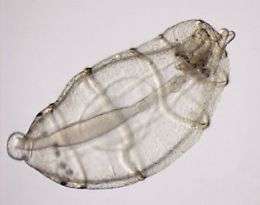
(PhysOrg.com) -- An unusual abundance of jelly-like creatures has been discovered in waters along the NSW coast from Sydney to Newcastle during a marine survey of the region by a team of scientists from the University of New South Wales (UNSW) and CSIRO.
Vast numbers of these small marine ’jelly balls’ have recently washed ashore on local beaches.
The research team aboard the Marine National Facility Research Vessel Southern Surveyor targeted these gelatinous animals, called salps, which while similar in appearance to the more familiar jellyfish, pose no threat to swimmers.
Salps are transparent, barrel-shaped animals that can range from one to 10 centimetres in length. They are typically found near the ocean’s surface and, as a result, can be washed up onto dry land.
The voyage’s Chief Scientist, UNSW Professor Iain Suthers says the team observed salps in numbers never before recorded in Australian waters. “In fact, salp numbers are ten-times greater than those seen 70 years ago.”
Salp abundance typically increases during the spring, but the actual numbers have not been monitored in recent years.
“The appearance of these animals is seasonal, but this spring their abundance seems to be enhanced by a strong East Australian Current, which brings more nutrients to the surface waters for the algae that the salps prefer to eat," Professor Suthers says. "This stimulates their remarkable growth rates. Local wind and currents then bring them ashore.”
Sydney residents have also seen the remains of such blooms as masses of blue-tinged, clear jelly at the high-tide mark in recent weeks.
Similar trends of increasing salp abundance have been observed in other waters around the world and are consistent with predicted outcomes of the warming oceans.
CSIRO Marine and Atmospheric Research and University of Queensland scientist, Dr Anthony Richardson, says salps could be important to reducing the impacts of climate change.
"Salps feed on small plants in the water known as phytoplankton that take up carbon dioxide during photosynthesis,” he says. “As part of normal salp growth, they produce heavy, carbon-rich faeces that can sink rapidly to the seafloor, removing carbon from the oceans.”
Several international research groups are exploring the potential role of salps and other marine organisms in carbon sequestration. The Australian research highlights the challenges associated with understanding the impacts of climate change and developing ways to best adapt to future changes in the marine environment.
Provided by CSIRO


