'Smart water' may help boost production from oil wells by 60 percent
Sep 08, 2008
'Smart water' may help boost production from oil wells by 60 percent
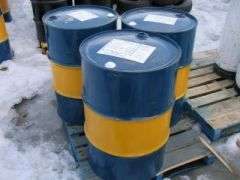
"Smart water," a type of seawater, could help meet energy demands by boosting oil extraction by as much as 60 percent, scientists say. Credit: Trevor MacInnis

Researchers in Norway report that injecting a special type of seawater called "smart water" into certain low-yield oil wells may help boost oil extraction by as much as 60 percent. The study could help meet rising energy demands and provide consumers with some financial relief at the gas pump in the future, the scientists suggest. Their findings are scheduled for the Sept. 10 issue of ACS' Energy & Fuels.

In the new study, Tor Austad and colleagues note that more than 50 percent of the world's oil reserves — billions of gallons of oil — are trapped in oil reservoirs composed of calcium carbonate, rocks that include chalk and limestone.

Scientists now inject seawater into chalk-based oil wells to boost oil extraction, but researchers do not know if the method will work for oil wells composed of limestone, a tough material known for its low oil-recovery rates — usually less than 30 percent, but in some cases less than 5 percent.

To find out, the scientists collected core samples from Middle East oil reservoirs composed of limestone and soaked them in crude oil for several weeks. They then prepared batches of so-called "smart water," seawater formulated with sulfate and other substances to improve seawater's ability to penetrate limestone. In laboratory studies, they showed that irrigating the limestone samples with "smart water" led to the same fundamental chemical reactions that occur in chalk. Upcoming experiments will verify if the efficiency in oil recovery is comparable to the observations in chalk, the scientists note.

Article: "Smart Water" for Oil Recovery from Fractured Limestone: A Preliminary Study"; dx.doi.org/10.1021/ef800062n

Source: American Chemical Society

Explore further: Explainer: What are chemical weapons?

add to favorites email to friend print save as pdf

Related Stories

Discovering oil at micro level

Nov 03, 2011

(PhysOrg.com) -- Getting trapped oil out of porous layers of sandstone and limestone is a tricky and costly operation for energy exploration companies the world over. But now, University of Alberta researchers ...

Debate stirred over 1st major US tar sands mine

Apr 10, 2011

(AP) -- Beneath the lush, green hills of eastern Utah's Uinta Basin, where elk, bear and bison outnumber people, the soil is saturated with a sticky tar that may soon provide a new domestic source of petroleum ...

Recommended for you

Explainer: What are chemical weapons?

16 hours ago

There was chaos on the streets of Halajba in March 1988. In this corner of Iraq, at the time Iraqi Kurdistan, people had suddenly started experiencing cold-like symptoms – tight chest and nasal congestion. ...

Scientists develop advanced biological computer

16 hours ago

(Phys.org) —Using only biomolecules (such as DNA and enzymes), scientists at the Technion-Israel Institute of Technology have developed and constructed an advanced biological transducer, a computing machine capable of manipulating ...

Research aims to fix long-held, inaccurate insect model

17 hours ago

(Phys.org) —In humans, a polymer called melanin determines skin, eye and hair color—the darker the skin, the more melanin in a person's body. For insects, melanin is a major aspect of their immune defense ...

Molecular modelling to help create better, safer drugs

17 hours ago

(Phys.org) —How our bodies break down the common drugs ibuprofen, diclofenac and warfarin is the subject of a new study from the University of Bristol, published in the Journal of the American Chemical So ...

User comments : 0

More news stories

Scientists develop advanced biological computer

(Phys.org) —Using only biomolecules (such as DNA and enzymes), scientists at the Technion-Israel Institute of Technology have developed and constructed an advanced biological transducer, a computing machine capable of manipulating ...

Galaxies fed by funnels of fuel

(Phys.org) —Computer simulations of galaxies growing over billions of years have revealed a likely scenario for how they feed: a cosmic version of swirly straws.