Amphibian populations dropping in Edmonton's wetlands
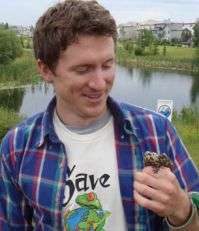
Man-made wetlands in Edmonton's new neighborhoods may look good, but do they adequately sustain life?
In the International Year of the Frog, that's the question Brett Scheffers wants to answer as part of his master's project in biological sciences. He's monitoring frogs, salamanders and snakes living in urban wetlands to see how well they're surviving. The plight of amphibians worldwide has been a huge concern of late. The World Conservation Union recently reported that at least one third of known amphibian species are threatened with extinction, largely because of the rapid spread of an infectious fungal disease.
And as far as Sheffer's research is concerned, all is not well.
"Around the city in the last six years, about 25 per cent of wetlands have been destroyed," said Scheffers, who has surveyed about 90 wetlands and is now closely monitoring six.
According to provincial law, wetlands must now be replaced when they succumb to urban sprawl, but it's unclear whether these constructed counterparts support vulnerable amphibian populations.
"In a normal, natural wetland, we would find anywhere between five and six species of frog," he said on Wednesday, standing by a constructed wetland in Whitemud Ravine on Edmonton's south side. "Here there are only two." He says there are also far fewer amphibians in general in the Whitemud case, hundreds as opposed to thousands in a natural setting, and no evidence of snakes.
"When [contractors] build these houses, they basically build a bunch of impermeable boundaries," said Scheffers. "We don't know how significant these wetlands are on the landscape. Furthermore, we don't know what kind of impact urbanization has on salamanders or other amphibians like wood or chorus frogs."
So with his faithful dog Guinness at his side, Scheffers has been tracking the amphibians to more precisely measure the drop in local biodiversity and population levels. By coating frogs in fluorescent dye and setting traps that indicate what direction they're moving in, he can monitor what routes they choose when they leave a pond.
The good news is that when they have a choice, amphibians head for forest rather than developed areas. But in many cases "they get about 20 or 30 metres from the wetland, then something clicks; they go, 'where am I going?' Then they turn around and go right back."
Despite its problems, the Whitmud Ravine an example of how to get it almost right, says Scheffers. It's surrounded by houses but still connected to a forest.
"Unfortunately they put a road in between the forest and the wetland, and amphibians do not like roads. It's very hard for frogs to get across, so they tend to just get trapped in storm water drains."
There are easy ways to foster biodiversity in constructed wetlands, says Scheffers. Provide enough shallow water to lay eggs, slope banks gradually into deeper water and plant lots of vegetation below as well as above the water. Most importantly, however, frogs need access to undisturbed forest or grasslands.
When Scheffers finishes his master's degree next year, he plans to continue his work in a doctorate in urban amphibian ecology, a fledgling field since many regard urban environments as a lost cause when it comes to protection.
"But the mindsets are changing," he said. "People see that it's better to have a more functional wetland for water quality and other biological purposes than just big storm water retention ponds.
"Urban sprawl is with us and will be with us for a very long time. So I would advise future land managers to have some sort of foresight if we want to make sure we have biodiversity in urban landscapes."
Source: University of Alberta


