Peptide discovered in scorpion venom may hold key to secretory diseases
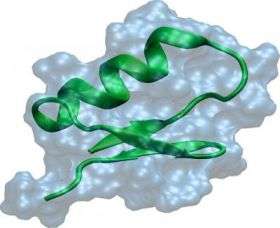
Researchers have discovered a peptide in scorpion venom that may hold the key to understanding and controlling cystic fibrosis and other secretory diseases.
In the December 28 issue of the Journal of Biological Chemistry, an international team of researchers describes how this novel peptide, called GaTx1, can control the movement of ions and water out of cells by interacting with a crucial chloride channel. This research was funded by the National Institutes of Health, National Science Foundation and Cystic Fibrosis Foundation.
“Peptide toxins from scorpions, snakes, snails and spiders paralyze prey by blocking nerve or muscle ion channels so the prey can’t get away,” explained Nael A. McCarty, an associate professor in the Georgia Institute of Technology’s School of Biology. “Those toxins have been enormously useful for studying the potassium, calcium, and sodium channels that they interact with, but this is the first toxin discovered that potently binds to and selectively and reversibly inhibits a chloride channel of known molecular identity.”
Chloride channels are crucial for secretion in many epithelial tissues, but little has been known about their structures and mechanisms. Researchers do know that chloride channels open to allow millions of chloride ions to travel through them and out of epithelial cells. This movement creates an osmotic gradient that allows water to flow.
For the more than 70,000 people worldwide affected by cystic fibrosis, a lack of water flow in airway cells results in abnormally thick, sticky mucus that commonly causes blockages that obstruct airways and glands. The lack of water flow stems from a problem in a chloride channel called the cystic fibrosis transmembrane conductance regulator (CFTR) protein.
In individuals with cystic fibrosis, the CFTR protein is mutated, often with one or more amino acids deleted, and consequently misfolded. In the most common CFTR mutation leading to cystic fibrosis, the location of the deletion causes the chaperone proteins – which are responsible for quality assurance within cells – to bind to the misfolded proteins and discard them from the cell. Loss of CFTR proteins stops water from flowing into or out of the cells, thereby altering the conditions in the airway, leading to cystic fibrosis.
In other diseases, CFTR channels are overactive, which also causes problems. These include secretory diarrhea, a worldwide health concern causing thousands of deaths per year; diarrhea-predominant inflammatory bowel disease; and autosomal dominant polycystic kidney diseases, the fourth leading cause of end-stage renal disease in the United States.
With collaborators at the Hungarian Academy of Sciences, Emory University and the University of Calgary, the researchers used reversed-phase high-performance liquid chromatography (HPLC) to extract the novel GaTx1 peptide from the complex venom of the Giant Israeli Scorpion, Leiurus quinquestriatus hebraeus.
“We chose this technique because each different peptide has slightly different water solubility and hydrophobicity properties, allowing them to be separated,” explained Julia Kubanek, an associate professor with joint appointments in the Georgia Tech School of Biology and School of Chemistry and Biochemistry.
Former Emory University graduate student Matthew Fuller and Georgia Tech graduate student Christopher Thompson collected individual peptides separated by the HPLC system and then applied each to chloride channels to see which peptide was responsible for the overall effects of the venom. They discovered a novel peptide that bound to the cytoplasmic side of the CFTR protein and weighed 3.7 kilodaltons – they called it GaTx1.
The researchers plan to use GaTx1 as a molecular probe to learn more about how chloride channels are structured and regulated. They also plan to study how this peptide can be useful in treating secretory diseases. For people with illnesses like secretory diarrhea, GaTx1 could be used to inhibit the channels from opening, in turn decreasing production of the watery diarrhea that often leads to death in patients suffering from cholera and other diarrheal diseases, said McCarty.
To treat patients with cystic fibrosis, GaTx1 could possibly be used to increase water production, by binding to the chaperone binding sites on the chloride channel. By blocking chaperones from binding, CFTR proteins would not be discarded and thus ions and water would flow from the cells to thin the mucus in the airway, according to McCarty.
“Even though the channels would be misfolded and probably only function at 50 percent capacity, chloride ions and water would still be transported through the cell,” said McCarty. “This is better than the alternative of allowing the chaperones to discard all of the CFTR proteins.”
McCarty has been studying CFTR for his entire research career and as he moves to a new position as associate professor in pediatrics and senior cystic fibrosis scientist at Emory University, he will continue this work in collaboration with researchers at Georgia Tech.
“GaTx1 has the potential to be used as a drug to help patients with cystic fibrosis and these other secretory diseases,” added McCarty. “My new role at Emory will allow me to conduct pre-clinical studies to explore experimental drug treatment options based on this toxin.”
Source: Georgia Institute of Technology


