NASA survey confirms climate warming impact on polar ice sheets
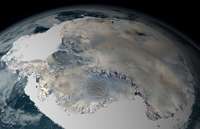
In the most comprehensive survey ever undertaken of the massive ice sheets covering both Greenland and Antarctica, NASA scientists confirm climate warming is changing how much water remains locked in Earth's largest storehouses of ice and snow.
"If the trends we're seeing continue and climate warming continues as predicted, the polar ice sheets could change dramatically," said survey lead author Jay Zwally of NASA's Goddard Space Flight Center, Greenbelt, Md. "The Greenland ice sheet could be facing an irreversible decline by the end of the century."
Other recent studies have shown increasing losses of ice in parts of these sheets. This new survey is the first to inventory the losses of ice and the addition of new snow on both continents in a consistent and comprehensive way throughout an entire decade.
The survey shows there was a net loss of ice from the combined polar ice sheets between 1992 and 2002 and a corresponding rise in sea level. The survey documented for the first time extensive thinning of the West Antarctic ice shelves, an increase in snowfall in the interior of Greenland and thinning at the edges. All are signs of a warming climate predicted by computer models.
The survey combines new satellite mapping of the height of the ice sheets from two European Space Agency satellites. It also used previous NASA airborne mapping of the edges of the Greenland ice sheets to determine how fast the thickness is changing. Researchers used nine years of elevation mapping over much of Antarctica and 10.5 years of data over Greenland from the European Remote-sensing Satellites 1 and 2. The survey pinpointed where the ice sheets were thinning and where they were growing.
In Greenland, the survey saw large ice losses along the southeastern coast and a large increase in ice thickness at higher elevations in the interior due to relatively high rates of snowfall. This study suggests there was a slight gain in the total mass of frozen water in the ice sheet over the decade studied, contrary to previous assessments.
According to Zwally, this situation may have changed in just the past few years. Last month NASA scientists at the Jet Propulsion Laboratory, Pasadena, Calif., reported a speed up of ice flow into the sea from several Greenland glaciers. That study included observations through 2005; Zwally's survey concluded with 2002 data.
"The melting of ice at the edges of the ice sheet is also increasing, which causes the ice to flow faster," Zwally said. "A race is going on in Greenland between these competing forces of snow build-up in the interior and ice loss on the edges. But we don't know how long they will be approximately in balance with each other or if that balance has already tipped in favor of the recently accelerating outflow from glaciers."
The situation was very different in Antarctica. The ice sheets had a major net loss of ice due to outflow from West Antarctica. These loses, which may have been going on for decades, outweighed the gains in snow and ice seen in the East Antarctic ice sheet and parts of West Antarctica. Also thinning were the ice shelves around West Antarctica, where temperatures have been increasing. The floating ice shelves are vulnerable to climate change. Some ice shelves in the Antarctic Peninsula have totally disintegrated in recent years, allowing the ice from the land to move into the ocean faster.
When the scientists added up the gains and loses of ice from the Greenland and Antarctic sheets, there was a net loss of ice to the sea. The Greenland ice sheet annually gained approximately 11 billion tons of water, while Antarctica lost about 31 billion tons per year. The 20 billion net tons added to the oceans is equivalent to the amount of fresh water annually used in homes, businesses and farming in New York, New Jersey and Virginia.
"The study indicates that the contribution of the ice sheets to sea-level rise during the decade studied was much smaller than expected, just two percent of the recent increase of nearly three millimeters (0.12 inches) a year," Zwally said. "Current estimates of the other major sources of sea-level rise - expansion of the ocean by warming temperatures and runoff from low-latitude glaciers - do not make up the difference, so we have a mystery on our hands as to where the water is coming from. Continuing research using NASA satellites and other data will narrow the uncertainties in this important issue and help solve the mystery."
Source: NASA Goddard Space Flight Center


