Researchers shed new light on hybrid animals
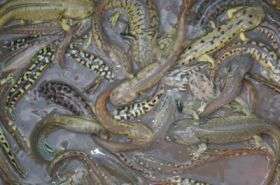
What began more than 50 years ago as a way to improve fishing bait in California has led a University of Tennessee researcher to a significant finding about how animal species interact and that raises important questions about conservation.
In the middle of the 20th century, local fishermen who relied on baby salamanders as bait introduced a new species of salamander to California water bodies. These Barred Tiger salamanders came into contact with the native California Tiger salamanders, and over time the two species began to mate.
"To give you a sense of the difference between these two species, they are about as closely related as humans and chimpanzees," said UT assistant professor Ben Fitzpatrick, a faculty member in the Department of Ecology and Evolutionary Biology.
Mating between two different species creates a hybrid offspring. According to Fitzpatrick, while such hybrids have been found to be successful in plant species, research has generally shown that animal hybrids are not able to sustain themselves -- in scientific terms, they lack "fitness."
This understanding made Fitzpatrick's findings especially surprising when he looked at the offspring of the two salamander species in California. He and colleague Bradley Shaffer of the University of California, Davis, found that the new hybrid salamanders were not only surviving, but in some cases, thriving.
"I thought I was studying hybrid dysfunction going into this study -- looking at how hybrids go wrong," said Fitzpatrick. "The level of vigor in these hybrids was completely unexpected."
Their research, funded by the National Science Foundation and the Environmental Protection Agency, will appear in the upcoming issue of the Proceedings of the National Academy of Sciences. It is among the first to show hybrid vigor among animal species, and Fitzpatrick noted that the work raises a number of questions for conservationists.
The California Tiger salamander, which is native to the area of the study, is listed as threatened under the U.S. Endangered Species Act, while the Barred Tiger salamander is not. The data in the article lead the researchers to predict that eventually all California Tiger salamanders will have some of the non-native genes. In a sense, the entire species would then have hybrid ancestry.
According to Fitzpatrick, the finding raises questions about whether this would be considered beneficial to the native species or not -- it depends on how conservationists choose to define the new hybrid.
"If they consider it an acceptable modification of the original species, then this could enhance the chances for survival of the California Tiger salamander," he said, "but others may consider the hybrids to be genetically impure and see hybridization as accelerating extinction."
It is not yet clear from the research what is causing the hybrids to thrive.
"Our prediction is that, because of their advantages, the hybrids will remain part of the gene pool," said Fitzpatrick. "What we don't know is if those advantages come from the synergistic interaction of certain genes -- that they are greater than the sum of their parts -- or if they simply get the 'best of both worlds' by a selection of useful individual traits from each species."
Because the research is in such early stages, Fitzpatrick and colleagues plan to broaden their study of these salamanders, and also explore the implications of these vigorous hybrids for other animals in their ecosystem.
They have expanded the number of genetic markers that they are analyzing in the hybrids to determine the extent of their genetic mixing. Given that the new hybrids are finding more success in their environment, the researchers also plan to study whether their success is reducing food supply or other resources from native species in the area.
Fitzpatrick notes that their discoveries place the work on the leading edge of hybridization studies.
"We're right at the front in thinking that these ideas may be much more generally applicable," he said. He pointed to two other studies in recent months that have explored the issue of hybridization in butterflies.
Source: University of Tennessee at Knoxville


