Satellite tracking reveals threats to Borneo pygmy elephants
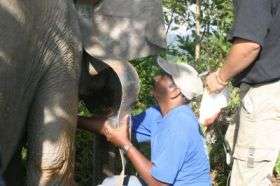
A new WWF study tracking pygmy elephants by satellite shows that the remaining herds of these endangered elephants, which live only on the island of Borneo, are under threat from forest fragmentation and loss of habitat.
Borneo pygmy elephants depend for their survival on forests situated on flat, low lands and in river valleys, the study found. Unfortunately, it is also the type of terrain preferred for commercial plantations. Over the past four decades, 40 percent of the forest cover of the Malaysian State of Sabah, on the northeast of the Island of Borneo – where most of pygmy elephants are – has been lost to logging, conversion for plantations and human settlement.
“The areas that these elephants need to survive are the same forests where the most intensive logging in Sabah has taken place, because flat lands and valleys incur the lowest costs when extracting timber,” said Raymond Alfred, Head of WWF-Malaysia’s Borneo Species Programme.
“However, the Malaysian government’s commitment to retain extensive forest habitat throughout central Sabah, under the “Heart of Borneo” agreement, should ensure that the majority of the herds have a home in the long term,” Alfred added.
This study, the largest using satellite collars ever attempted on Asian elephants, suggests that pygmy elephants prefer lowland forests because there is more food of better quality on fertile lowland soils.
But the study also shows that elephants’ movements are noticeably affected by human activities and forest disturbance. Data gathered so far reveals there are probably not more than 1,000 pygmy elephants left in Sabah – less than the 1,600 or so estimated previously.
And, one important area for the elephants, the Lower Kinabatangan Wildlife Sanctuary, may be too small and too fragmented to support a viable population for the long term, according to the report.
Five pygmy elephants were darted and outfitted with collars two years ago by the Sabah Wildlife Department with WWF assistance, after tracking the elephants on foot through the dense jungle was found too difficult over long periods. The collars sent GPS locations to a WWF computer via satellite as often as once a day. This was the first long-term study done of Borneo pygmy elephants.
“It’s amazing that we still know so little about one of the biggest land mammals on Earth,” said Matthew Lewis, program officer for WWF’s Species Conservation Program. “The only reason we now have a good understanding of where these elephants travel from day to day is because satellite collar technology has given us access to the most inaccessible forests on Borneo.”
The information provided by the research might also help predict locations where elephants and farms may come into future conflict.
While pygmy elephants can live in logged and secondary forests, it is crucial that their remaining habitat is managed sustainably and not converted into plantations, WWF says. Logging in elephant habitat should only take place if there is a long-term forest management plan in place, and oil palm plantations should be established on degraded, non-forested land devoid of elephants and orangutans, according to the conservation organization.
Source: World Wildlife Fund


