Fridge magnets to fix grammar
Jan 26, 2006
Fridge letters

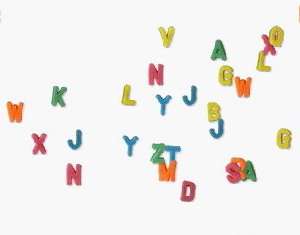
Fridge magnets could soon be correcting bad grammar and replacing words with synonyms, Australian Broadcasting Corporation has reported. Australian digital artist Pierre Proske claims that fridge magnets can be trained to transmit information about themselves between one another and in this way arrange themselves into a grammatical construction.

Proske is currently working with researchers at the Future Applications Lab of Sweden's Viktoria Institute to develop intelligent fridge magnets. The team will present their work later this month at the International Conference on Intelligent User Interfaces in Sydney.

According to Proske, each fridge magnet is made up of a 16-character liquid crystal display. These magnets can randomly generate a word and categorise it as a noun, verb, adjective or adverb. Once categorised, the information is transmitted to any adjacent magnets on the fridge door, enabling them to change words where necessary and construct phrases and sentences in accordance with the rules of grammar.

Words suggested by a magnet can be changed by shaking it. This resets the magnet, causing it to forget its grammer rules. The magnet can now be retrained.

The nature of its training will influence how a magnet’s word selection works. Proske, cites the following example: someone may have two sets of fridge magnets – one at home and one work - communicating via wireless internet. Both sets interpret differently. What one set of magnets reads as, "Crazy kangaroos dream wildly," the other may interpret as, "Drunk wallabies laze around the pool," following the Australian context.

This research, however, is not aimed at releasing a product for the consumer market. Its real purpose is to contribute to the development of more intelligent robots.

Copyright 2006 PhysOrg.com

Explore further: US scientist not involved in classified research: witnesses

add to favorites email to friend print save as pdf

Related Stories

New technology in the magnetic cooling of chips

Feb 20, 2013

Researchers from CICnanoGUNE and the University of Cambridge have developed a new technology in the magnetic cooling of chips based on the straining of materials. Compared with the current technologies, this advance enables ...

Breakthrough study models dying stars in a lab

Feb 14, 2013

A team of scientists has successfully reproduced conditions in one of the most hostile environments in the galaxy, enabling them to find out more about how atoms behave in these extreme settings.

Fridge magnet transformed

Mar 11, 2011

The ubiquitous and unremarkable magnet, BaFe12O19, is manufactured in large volumes, has the simplest crystal structure in its class, and is often seen on refrigerator doors—but it is set for an inte ...

Recommended for you

Relaxed tourists share more

50 minutes ago

Tourists set on relaxing and socialising when they reach their holiday destination tend to do little advance research on the internet before making their trip, but are more likely to share travel information and photos on ...

Tiny ancient bandicoot shines light on future

2 hours ago

(Phys.org) —A 20 million-year-old fossil skull identified as a 'pocket-sized' ancestor of the bandicoot will give insights into the future of Australia's modern endangered animals.

Daylight Saving Time spurs drop in crime rate

3 hours ago

(Phys.org) —Researchers are no longer in the dark about when criminals are most likely to attack. William & Mary economist Nicholas Sanders teamed up with the University of Virginia's Jennifer Doleac to study the connection ...

User comments : 0

More news stories

Relaxed tourists share more

Tourists set on relaxing and socialising when they reach their holiday destination tend to do little advance research on the internet before making their trip, but are more likely to share travel information and photos on ...

Tiny ancient bandicoot shines light on future

(Phys.org) —A 20 million-year-old fossil skull identified as a 'pocket-sized' ancestor of the bandicoot will give insights into the future of Australia's modern endangered animals.

Daylight Saving Time spurs drop in crime rate

(Phys.org) —Researchers are no longer in the dark about when criminals are most likely to attack. William & Mary economist Nicholas Sanders teamed up with the University of Virginia's Jennifer Doleac to study the connection ...

Anabolic steroids may affect future mental health

There is a link between use of anabolic-androgenic steroids and reduced mental health later in life. This is the main conclusion of a new study on elite male strength athletes that researchers from the University of Gothenburg ...