For spider-strength silk go back to basics
Jun 04, 2007
For spider-strength silk go back to basics
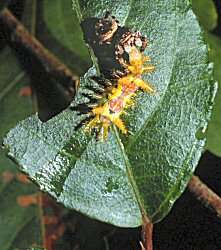
Changing the type of starting material being used to make artificial silk could be the key to producing fibres as strong and versatile as spider silk. Credit: Oxford Silk Group 2007

If you want to spin silk like a spider then you need to rethink your starting material, Oxford University scientists have discovered.

The researchers have developed a new way of assessing the potential of the raw material – silk ‘dope’ – for producing fibres with the amazing properties of natural silks spun by spiders and silkworms. They found that the starting materials currently being tried, ‘cocktails’ of dissolved silk fibres, do not have the same flow properties as natural silk dope, and so cannot be spun into super-strong filaments.

A report of the research appears in this week’s edition of Polymer. It describes how Chris Holland and Professor Fritz Vollrath, together with Dr Ann Terry and Dr David Porter, from the Oxford Silk Group took unspun natural silk dope and compared it to artificial silk dope under shear forces similar to those encountered in a spider’s spinning duct. They found that natural and artificial dopes had fundamentally different flow properties.

Native silk dope taken straight from the gland can be drawn into strong fibres without chemical assistance – as demonstrated by the old fisherman’s way of drawing the glands of silkworms in order to ‘spin’ his ‘silk cast’ fishing line. Yet the fibres spun from artificial dope material, which have been ‘reconstituted’ by dissolving silk fibres, cannot be spun into any type of serious filament without chemical treatments, and even then these do not approach the strength of natural silk.

Clearly, native silk dopes have the innate ability to form into a fibre, which is lost in translation when attempting to create artificial silk dope. Discovering the mechanisms behind this seemingly effortless process will be a crucial step towards the biomimetic spinning of artificial silk fibresusing the animal’s own technology.

Professor Fritz Vollrath said: ‘To mimic the way in which animals spin silk we believe it will be necessary first to match the flow properties of reconstituted and native silk feedstocks. This could ultimately lead to landing one of Nature’s greatest catches – high performance fibres, naturally produced.’

Source: University of Oxford

Explore further: New method for producing clean hydrogen

add to favorites email to friend print save as pdf

Related Stories

Recommended for you

New method for producing clean hydrogen

12 hours ago

Duke University engineers have developed a novel method for producing clean hydrogen, which could prove essential to weaning society off of fossil fuels and their environmental implications.

Making ice-cream more nutritious with meat left-overs

20 hours ago

Food industries are now turning meat left-over into high-protein content ingredients for food supplements, or to be added to processed food. But a EU-wide regulation covering them is still lacking.

Non-wetting fabric drains sweat

May 20, 2013

(Phys.org) —Waterproof fabrics that whisk away sweat could be the latest application of microfluidic technology developed by bioengineers at the University of California, Davis.

Protein study suggests drug side effects are inevitable

May 20, 2013

A new study of both computer-created and natural proteins suggests that the number of unique pockets – sites where small molecule pharmaceutical compounds can bind to proteins – is surprisingly small, meaning drug side ...

Attacking MRSA with metals from antibacterial clays

May 17, 2013

In the race to protect society from infectious microbes, the bugs are outrunning us. The need for new therapeutic agents is acute, given the emergence of novel pathogens as well as old foes bearing heightened antibiotic resistance.

User comments : 0

More news stories

New method for producing clean hydrogen

Duke University engineers have developed a novel method for producing clean hydrogen, which could prove essential to weaning society off of fossil fuels and their environmental implications.

Protein study suggests drug side effects are inevitable

A new study of both computer-created and natural proteins suggests that the number of unique pockets – sites where small molecule pharmaceutical compounds can bind to proteins – is surprisingly small, meaning drug side ...

Beautiful 'flowers' self-assemble in a beaker

By simply manipulating chemical gradients in a beaker of fluid, materials scientists at Harvard have found that they can control the growth behavior of crystals to create precisely tailored structures—such ...

Attacking MRSA with metals from antibacterial clays

In the race to protect society from infectious microbes, the bugs are outrunning us. The need for new therapeutic agents is acute, given the emergence of novel pathogens as well as old foes bearing heightened antibiotic resistance.

If you can remember it, you can remember it wrong

(Medical Xpress)—Native peoples in regions where cameras are uncommon sometimes react with caution when their picture is taken. The fear that something must have been stolen from them to create the photo ...

B vitamins could delay dementia

(Medical Xpress)—Despite spending billions of dollars on research and development, drug companies have been unable to come up with effective treatments for dementia and Alzheimer's Disease (AD). Now, A. ...