TESS discovers a rocky planet that glows with molten lava as it's squeezed by its neighbors
UC Riverside astrophysicist Stephen Kane had to double-check his calculations. He wasn't sure the planet he was studying could be as extreme as it seemed.
The Astronomical Journal (often abbreviated AJ in scientific papers and references) is a peer-reviewed monthly scientific journal owned by the American Astronomical Society and currently published by Institute of Physics Publishing. It is one of the premier journals for astronomy in the world. Until 2008, the journal was published by the University of Chicago Press on behalf of the American Astronomical Society. The reason for the change were given by the society as the desire of the University of Chicago Press to revise its financial arrangement and their plans to change from the particular software that had been developed in-house. The other two publications of the society, the Astrophysical Journal and its supplement series, followed in January 2009. The journal was established in 1849 by Benjamin A. Gould. It ceased publication in 1861 due to the American Civil War, but resumed in 1885. Between 1909 and 1941 the journal was edited in Albany, New York. In 1941, editor Benjamin Boss arranged to transfer responsibility for the journal to the American Astronomical Society. The first electronic edition of The Astronomical Journal was published in January, 1998. With the July, 2006
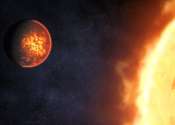
UC Riverside astrophysicist Stephen Kane had to double-check his calculations. He wasn't sure the planet he was studying could be as extreme as it seemed.
Planetary Sciences
May 9, 2024
0
145

A team of astronomers and citizen scientists has discovered a planet in the habitable zone of an unusual star system, including two stars and potentially another exoplanet.
Astronomy
Apr 30, 2024
0
811

Can tidal forces cause an exoplanet's surface to radiate heat? This is what a study accepted to the Astronomical Journal hopes to address as a team of international researchers used data collected from ground-based instruments ...
Planetary Sciences
Apr 22, 2024
0
23

Every time a star forms, it represents an explosion of possibilities. Not for the star itself; its fate is governed by its mass. The possibilities it signifies are in the planets that form around it. Will some be rocky? Will ...
Astronomy
Mar 27, 2024
0
29
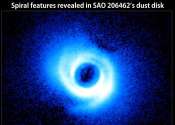
Planets form in disks of dust and gas called protoplanetary disks that whirl around a central protostar during its final assembly. Although several dozens of such disks have been imaged, just two planets have been caught ...
Planetary Sciences
Mar 27, 2024
1
546

A team of researchers from the SETI Institute, Berkeley SETI Research Center and the University of Washington reported an exciting development for the field of astrophysics and the search for extraterrestrial intelligence ...
Astronomy
Feb 12, 2024
4
236

The next generation of advanced telescopes could sharpen the hunt for potential extraterrestrial life by closely scrutinizing the atmospheres of nearby exoplanets, new research suggests.
Astrobiology
Jan 29, 2024
0
343

A recently discovered solar system with six confirmed exoplanets and a possible seventh is boosting astronomers' knowledge of planet formation and evolution. Relying on a globe-spanning arsenal of observatories and instruments, ...
Astronomy
Jan 26, 2024
3
161

Mason Leist is working remotely—127 million light-years from Earth—on images of a supermassive black hole in his office at the UTSA Department of Physics and Astronomy.
Astronomy
Jan 25, 2024
0
128

The Vera Rubin Observatory (VRO) is something special among telescopes. It's not built for better angular resolution and increased resolving power like the European Extremely Large Telescope or the Giant Magellan Telescope. ...
Astronomy
Jan 23, 2024
1
66
