Scientists develop method to track immune system enzyme in live animals
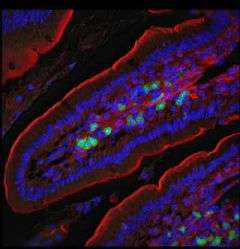
Scientists supported by the National Institute of Arthritis and Musculoskeletal and Skin Diseases (NIAMS) at the National Institutes of Health have created two mouse strains that will permit researchers to trace, in a live animal, the activity of an enzyme believed to play a crucial role both in the normal immune response as well as autoimmunity and B cell tumor development. Their report appears in the Journal of Experimental Medicine.
The enzyme, known as activation-induced cytidine deaminase or AID (which has no relation to the AIDS virus), is expressed by B cells, which are produced in the bone marrow and are responsible for making antibodies that attack foreign invaders such as viruses and bacteria. The enzyme enables the cells to respond with precision to the almost limitless types of invaders the body may encounter. Unfortunately, it also has a down side.
B cells constantly scan the body for foreign invaders, explains Rafael Casellas, Ph.D., an investigator in NIAMS’ Molecular Immunology and Inflammation Branch and lead author of the paper. As B cells encounter foreign antigens from viruses, bacteria or allergens, they migrate to germinal centers — specialized microenvironments in tonsils, spleen and lymph nodes. Within germinal centers, B cells divide extensively and express the AID enzyme, which causes random mutations and recombination in the cells’ immunoglobulin (antibody) genes. For the most part, these genetic changes are beneficial because they enable B lymphocytes to attack and stop the invader. In some cases, however, AID-dependent alterations in the genetic material of B cells can also lead to unwanted results such as autoimmunity and development of B cell tumors, as in the case of Burkitt lymphoma.
"It becomes crucial that we comprehend how AID is regulated during the normal immune response as well as in tumorigenesis and autoimmunity," says Casellas. The problem with understanding how AID is regulated or deregulated is that there has not been an easy way to visualize the enzyme’s action in a living animal — until now.
To address this issue, Dr. Casellas and his colleagues created transgenic mice that had a green fluorescent protein derived from jellyfish fused to the AID enzyme. In these transgenic animals, B cells express the tagged enzyme during the immune response. In a second mouse strain, Casellas and coworkers expressed permanently a yellow fluorescent protein in the progeny of germinal center B cells. "Thanks to these new mouse models, we can track in live animals whenever the AID enzyme is active as well as the result of that activity," says Casellas. Scientists can also cross these new mouse strains with mice predisposed to B-cell tumors or autoimmunity to see differences in enzyme expression in health and disease.
Source: National Institute of Arthritis and Musculoskeletal and Skin Diseases


