Ovarian Cancer May Mimic Fallopian Tube Formation
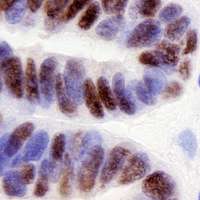
A new study suggests that ovarian cancer cells form by hijacking a developmental genetic process normally used to form fallopian tubes. Scientists at the Georgia Institute of Technology and the Ovarian Cancer Institute discovered that the protein, PAX8, is involved in the development of fallopian tubes and is present in ovarian cancer cells, but not in normal ovarian tissue. The discovery not only provides a new target for diagnostic and therapeutic interventions, but also opens new avenues for basic research in ovarian cancer pathology. The research appears in Volume 104, Issue 3 of the journal Gynceologic Oncology.
"Our finding sustains the promise of a molecular genetic understanding of different cancers and emphasizes the importance of describing cancer in the context of normal human development that has gone awry due to genetic and epigenetic alterations,” said Nathan Bowen, Georgia Cancer Coalition Distinguished Cancer Scientist at Georgia Tech and the Ovarian Cancer Institute (OCI).
Using cancerous and non-cancerous tissue straight from the operating room, Bowen and fellow OCI researchers are engaged in investigating the molecular profile of ovarian cancer tissue in order to discover the causes of ovarian cancer, develop a reliable diagnostic blood test and understand the genetic basis of resistance to chemotherapy.
In 2003, a group from Stanford University researching breast cancer discovered that paired box gene 8 is expressed in ovarian cancer tissue, but not in breast cancer. Taking note of the Stanford group’s results, OCI researchers began to investigate the possibility that the gene and its products may be an important biomarker for detecting and researching the causes of ovarian cancer. They began to look for evidence of PAX8, the protein made by paired box gene 8, which was the next step in establishing the gene as a biomarker. Not only did they find PAX8 in the ovarian cancer cells, but they also found it in the cells that form fallopian tubes, the secretory cells. In addition, they discovered that the protein is not expressed in the normal ovarian surface epithelium.
Bowen proposes that ovarian cancer begins by using PAX8 to direct an adult stem cell population found on the ovarian surface to proliferate and ultimately form ovarian cancer. When this gene is turned on in an embryo, it leads to the development of fallopian tubes. When the gene is expressed in healthy adult ovarian cells that migrate into the body of the ovary, it leads to the development of ovarian inclusion cysts. Normally, the growth of cysts is kept in check by the cells’ feedback mechanisms that turn off cell growth. But in cancer, when these feedback mechanisms are mutated, the cysts grow out of control until they metastasize.
"It’s a way of molecularly characterizing tumors that may lead to designing specific therapies based on the molecular profile,” said Bowen. “Biology is basically an information processing system to generate end products, and there are a lot of decisions that have to be made by the regulatory genes, like paired box gene 8, before the end products can be made.
Bowen’s next steps are to find out why paired box gene 8 gets turned on and to discover its targets in order to find out of it turns on another decision-making gene or an endpoint gene.
"That’s the daunting task of cancer biologists,” he said. “Now that we've sequenced the human genome, we have to make sense out of the thousands of genes that are expressed in cancer at the same time.”
Source: Georgia Institute of Technology


