Exercise when young may reduce risk of fractures later in life
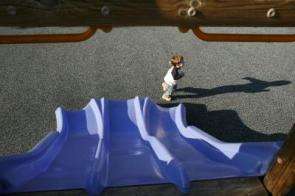
Running and jumping during childhood is more than child's play; it provides lifelong benefits for future bone health and appears to reduce the risk of fractures later in life according to a Journal of Bone and Mineral Research study by Indiana University-Purdue University Indianapolis (IUPUI) researchers. The study is now available in an advance online edition of the journal and will appear in a print edition in 2007.
"Our study demonstrates that exercise when young may reduce the risk of fractures later in life, and the old exercise adage of 'use it or lose it' may not be entirely applicable to the skeleton," said the study's principal investigator, Stuart J. Warden, assistant professor and director of research in physical therapy at the Indiana University School of Health and Rehabilitation Sciences at IUPUI.
Researchers exercised the right forearms of 5-week-old female rats for a few minutes three times a week for seven weeks. The left forearms were not exercised. Bone quantity and structure of the rats' right and left forearms were assessed before and after exercise. Researchers did not exercise the rats for the next 92 weeks -- virtually their entire lifespan. At that point, their forearm bones were assessed again for bone quantity and structure, as well as strength.
All procedures were performed following approval of the Institutional Animal Care and Use Committee of Indiana University.
"We knew that exercise increases bone size and strength, and that the skeleton is most responsive to exercise during the crucial growing years around puberty when you reach adult size and strength," Warden said. "We also knew that bones are not as responsive to exercise when you are older."
What was not known, however, was if the skeletal benefits of exercising while young would last a lifetime, Warden said. In other words, he said, "can you use activity while young to offset the risk of osteoporosis, or the risk of bone fractures, later in life""
The study determined the answer to that question is, "Yes," Warden said.
The researchers found that the rats retained all of the skeletal exercise benefits they obtained while young even though they hadn't exercised for the rest of their lives, Warden said.
"We found the exercise resulted in a lifetime increase in bone size in the right forearms of the rats and the bones of the left forearms never caught up in size," he said.
How big a bone is determines how resistant it is to bending, or how strong it is, he said.
As humans age, bone loss occurs from the inside surface of the bone outward, Warden noted. Exercising while young lays down additional outside layers of bone. This results in a bigger bone than otherwise would be the case.
"With more bone layers on the outside, you have more bone to lose," Warden said.
By making the right forearm bones bigger during growth in their study, the researchers found these bones to be stronger, or more resistant to fracture, than left forearm bones despite exercise being ceased a lifetime ago.
The study demonstrates the importance of childhood exercise that stimulates the skeleton, like basketball or jumping, Warden said. Short periods of exercise several times a week are all that is needed to stimulate bone development in children, he added.
The message to older adults, however, remains the same. Even though the best time to gain lifetime bone health benefits is while people are young, exercising when people are older is essential to maintain bone mass and balance, as well as maintain aerobic fitness, all of which aid in reducing the risk of low-trauma (osteoporotic) fractures associated with aging.
Source: Indiana University


