New 'dentist' test to detect oral cancer will save lives
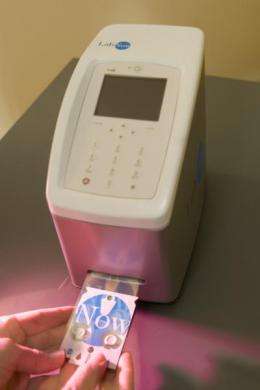
A new test for oral cancer, which a dentist could perform by simply using a brush to collect cells from a patient's mouth, is set to be developed by researchers at the University of Sheffield and Sheffield Teaching Hospitals NHS Foundation Trust.
The international research team, involving scientists in Sheffield, has been awarded $2 million from the USA's National Institutes of Health to develop the test, which could provide an accurate diagnosis in less than 20 minutes for lesions where there is a suspicion of oral cancer.
The current procedure used to detect oral cancer in a suspicious lesion involves using a scalpel to perform a biopsy and off-site laboratory tests which can be time consuming. The new test will involve removing cells with a brush, placing them on a chip, and inserting the chip into the analyser, leading to a result in 8-10 minutes. This will have a number of benefits including cutting waiting times and the number of visits, and also cost savings for the NHS.
The team in Sheffield, led by Professor Martin Thornhill, Professor of Oral Medicine at the University of Sheffield and a Consultant in Oral Medicine at Sheffield Teaching Hospitals, has begun carrying out clinical trials on patients at Charles Clifford Dental Hospital for two years to perfect the technology and make it as sensitive as possible. If the trials confirm that the new technology is as effective as carrying out a biopsy then it could become a regular application at dentist surgeries in the future.
If oral cancer is detected early, the prognosis for patients is excellent, with a five-year survival rate of more than 90 percent. Unfortunately, many oral cancers are not diagnosed early and the overall survival rate is only about 50 percent, among the lowest rates for all major cancers.
The project is being led by Professor John McDevitt from Rice University, USA, who has developed the novel micro-chip. This new technology uses the latest techniques in microchip design, nanotechnology, microfluids, image analysis, pattern recognition and biotechnology to shrink many of the main functions of a state-of-the-art clinical pathology laboratory onto a nano-bio-chip the size of a credit card.
The nano-bio-chips are disposable and slotted like a credit card into a battery-powered analyser. A brush-biopsy sample is placed on the card and microfluidic circuits wash cells from the sample into the reaction chamber. The cells pass through mini-fluidic channels about the size of small veins and come in contact with "biomarkers" that react only with specific types of diseased cells. The machine uses two LEDs, or light-emitting diodes, to light up various regions of the cells and cell compartments. Healthy and diseased cells can be distinguished from one another by the way they glow in response to the LEDs.
The technology is also being considered for future research projects for diagnosis and management of heart attacks, diabetes and other diseases.
Professor Thornhill said: "This new affordable technology will significantly increase our ability to detect oral cancer in the future. Diagnosis currently involves removing a small piece of tissue from the mouth and sending it to a pathologist. This is typically done at a hospital, can take a week or more and involve extra visits for the patient. With the new technology, a brush would be used to painlessly remove a few cells from the lining of the mouth that would be analysed within minutes in the presence of the patient, so that the patient would know the result before leaving the clinic.
"This technology will make it easier for us to screen suspicious lesions in the mouth and separate non-cancerous lesions from those where there is a risk of cancer and those where cancer has already developed. We have just started to recruit patients to a study that is designed to ensure that the new technology is at least as good as the old method at distinguishing these different types of lesion. Ultimately, dentists and doctors may be able to use this technology to check suspicious lesions in the mouth and reassure the vast majority of patients that they haven't got cancer without even having to send them to the hospital."


