Serotonin solves decades-old mystery in Parkinson's disease
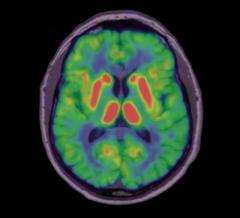
Sudden, uncontrolled movements called dyskinesias—a common side effect of treatment for Parkinson’s disease— are a result of excess serotonin cells in transplanted tissue that trick the brain into releasing dopamine, suggests a new study of two Parkinson's disease patients that received fetal tissue transplants over a decade ago, researchers report in the June 30 issue of Science Translational Medicine.
The study sheds light on the long term consequences of brain tissue transplants and may help improve future trials that consist of transplanting cells from other sources, such as bioengineered cells or stem cells. Pioneering surgeries performed with aborted fetal tissue in the 1980’s in patients with Parkinson’s proved that the diseased brain could be repaired, at least in some cases. The treatment aimed to replace decayed dopamine cells in the brain’s of Parkinson’s patients. Some transplanted patients showed remarkable improvement but eventually the majority developed dyskinesias.
The controversy surrounding the transplantation of fetal cells into adults put an end to human trials in the United States in the late 1980’s when the U.S. government temporarily banned fetal tissue research, though research continued in other parts of the world. The U.S. ban was lifted in the early 1990’s, but the cause of dyskinesias in these patients remained a mystery, and no effective treatment has been found.
Now, Marios Politis and colleagues in the United Kingdom and Sweden have discovered that the neurotransmitter serotonin is the culprit. Using imaging scans and radioactive tracers, the researchers were able to visualize the function of different chemicals in the two patient’s brains. Taking a closer look, they found that previously decayed dopamine neurons—a hallmark of Parkinson’s disease—were still restored and fully functional over a decade after transplantation. But Politis and colleagues also saw unexpectedly high amounts of serotonin neurons in the transplanted tissue.
The finding is puzzling because the usual dyskinesias in Parkinson’s are thought to be a result of dopamine action, not serotonin. The researchers discovered that the deceptive ability of serotonin neurons to switch to a different neurotransmitter—to adopt and pump out dopamine—causes the dyskinesias. Administering a drug to block this action almost immediately eliminated the dyskinesias in both patients. The authors also suggest that removing serotonin in any future cell-based therapies might prevent this crippling side effect. Recently, a new trial launched under the name TRANSEURO plans to use fetal cell therapy to treat Parkinson's disease, with the first surgeries planned in 2012.
More information: "Serotonergic Neurons Mediate Dyskinesia Side Effects in Parkinson’s Patients with Neural Transplants," by M. Politis et al. Science Translational Medicine.


