Arsenic used to treat leukemia

Apr 12, 2010 by Lin Edwards report
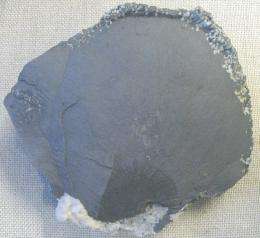
Massive native arsenic with quartz and calcite. Marie-aux-mines, Alsace, France. Photo taken at the Natural History Museum, London. (via Wikipedia)

(PhysOrg.com) -- Arsenic, known in the West mainly as a poison, has been used in traditional Chinese medicine for around two thousand years for the treatment of conditions such as syphilis and psoriasis. It has also been shown to have a substantial anti-cancer effect for a type of leukemia, but until now no one has known the mechanism for this effect. Now scientists in China have discovered arsenic targets proteins that contribute to the growth of cancer cells.

The researchers from China and France, led by Xiao-Wei Zhang of the State Key Laboratory of Medical Genomics, Shanghai Institute of Hematology, wanted to find out how works. The group, which included the Chinese Health Minister Chen Zhu, found that arsenic trioxide (As2O3) acts by promoting the degradation of a protein that encourages the growth of acute promyelocytic leukemia (APL) cells, although a detailed mechanism of how it works has yet to be established.

It was already known that a fusion protein called PML-RARalpha is produced as a result of a genetic mutation in APL, and this protein is essential to the growth and survival of the . When arsenic trioxide is present, a known as SUMO tags the fusion protein, which is then destroyed. When the protein is destroyed, the cancer cell can no longer survive. What the new research demonstrated was that As2O3 binds to a part of the protein called a zinc finger, which is rich in cysteine residues. As a result several protein molecules join together to form an insoluble protein, and the aggregate is then bound by SUMO, which destroys it.

APL affects the blood and bone marrow, and causes a drop in production of normal and platelets. Until the 1970s there was no effective treatment for the disease and the death rate was virtually 100%, but in 1992 a group of Chinese doctors demonstrated the effectiveness of arsenic in treating the disease. Now, as a result of treating APL with arsenic in China, over 90 per cent of patients survive at least five years with no signs of the disease.

Arsenic treatment has an advantage over chemotherapy because there is a lower incidence of side effects such as hair loss and suppression of the immune system. Many other countries now use arsenic in the treatment of APL, but some doctors refuse to recommend it, and some patients refuse to accept it because of its reputation as a poison.

The paper was published on 9 April, in the journal Science.

Explore further: Research identifies a way to make cancer cells more responsive to chemotherapy

More information: Arsenic Trioxide Controls the Fate of the PML-RAR-[alpha] Oncoprotein by Directly Binding PML, Science 9 April 2010: Vol. 328. no. 5975, pp. 240 - 243, DOI:10.1126/science.1183424

Related Stories

Targeted Nanoparticles Boost Arsenic’s Anticancer Punch

Jul 22, 2009

Arsenic trioxide has a long history as a potent human poison, but it also has proven valuable as one of the primary treatment options for acute promyelocytic leukemia. Efforts to use arsenic trioxide to treat other types ...

Arsenic and new rice

Jun 10, 2008

Amid recent reports of dangerous levels of arsenic being found in some baby rice products, scientists have found a protein in plants that could help to reduce the toxic content of crops grown in environments with high levels ...

Water-stingy agriculture reduces arsenic in rice markedly

Jul 28, 2008

A new farming method first developed to conserve precious irrigation water may have the added benefit of producing rice containing much less arsenic than rice grown using traditional rice-farming methods, researchers in the ...

Study: Crystal removes arsenic cheaply

Nov 10, 2006

A common rust-like crystal may offer an inexpensive way to rid drinking water of hazardous levels of arsenic, Rice University researchers in Houston said.

1950s scandal haunts Japan

Jun 18, 2007

Scientists in Japan say people who consumed powdered milk laced with arsenic in the 1950s are currently experiencing a higher rate of traffic deaths.

Recommended for you

Mayo Clinic genomic analysis lends insight to prostate cancer

4 hours ago

Mayo Clinic researchers have used next generation genomic analysis to determine that some of the more aggressive prostate cancer tumors have similar genetic origins, which may help in predicting cancer progression. The findings ...

User comments : 2

Adjust slider to filter visible comments by rank

Display comments: newest first

Bonkers
not rated yet Apr 12, 2010
Arsenic, forgive me if i'm wrong, but don't you get immunity from it if you consume regularly? - I'm sure there was one King of England that took it regularly as a precaution against poisoning.
mattytheory
5 / 5 (1) Apr 12, 2010
Aren't the drugs used in chemotherapy poison too? Oh wait, someone is making a profit off it so we don't call it poison we call it medicine...

More news stories

Controlling mood through the motions of mitochondria

(Medical Xpress)—Regulating the distribution of power in neurons is done by a system that makes the national electric grid look simple by comparison. Each neuron has several thousand mitochondria confined ...

Ferrets, pigs susceptible to H7N9 avian influenza virus

Chinese and U.S. scientists have used virus isolated from a person who died from H7N9 avian influenza infection to determine whether the virus could infect and be transmitted between ferrets. Ferrets are often used as a mammalian ...

WHO: Scientific red tape mars efforts vs. virus

International efforts to combat a new pneumonia-like virus that has now killed 22 people are being slowed by unclear rules and competition for the potentially profitable rights to disease samples, the head ...

Google Drive sports new view and scan enhancements

(Phys.org) —Google Drive has a new look and functions. The makeover in Google Drive features scanning and interface enhancements that put the user into "card" mode. The enhancements make it easy for the ...