Every second counts when treating a traumatic injury. While our bodies are built to quickly stem bleeding from everyday nicks and cuts, major trauma -- whether sustained on the battlefield or in a car accident -- can cause hemorrhaging that often overwhelms the body's natural blood-clotting process.
To give nature a boost, a team led by Erin Lavik, a Case Western Reserve University biomedical engineering professor, and her former doctoral student James P. Bertram, have built synthetic platelets from biodegradable polymers that are designed to link up with natural platelets at the site of an injury, like adding sandbags to a levy along a flooding river.
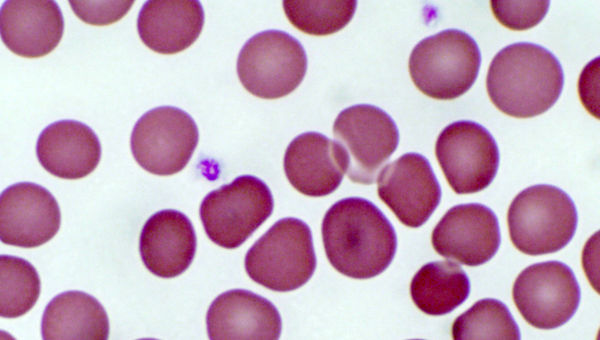
Blood platelets are the structural and chemical foundation of blood clotting. Using donor platelets can enhance clotting, but carries risks of several complications. And these platelets must be refrigerated and have a short shelf life. Tests show Lavik's synthetic platelets stay viable for at least two weeks.
In tests, use of the synthetic platelets cut clotting time in half when they were injected prior to injury. But even when not applied until 20 seconds after injury, bleeding stopped in 23 percent less time.
These reductions could buy medics, EMTs and emergency room teams valuable time when treating traumatic injury, which is the leading cause of death for people age 4 to 44.
The researchers were inspired by studies showing there are few options to treat soldiers suffering from internal injuries in Afghanistan and Iraq. They wanted to develop a treatment medics can keep in their field packs.
"The military has been phenomenal at developing technology to halt bleeding, but the technology has been effective only on external or compressible injuries," Lavik says. "This could be a complement to current therapies."
The work was published in the December issue of Science Translational Medicine. Lavik is currently seeking grants to fund further testing.
Provided by Case Western Reserve University


