The early detection of age-related memory deficits in mice
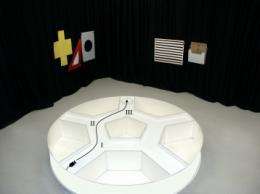
By studying the aging of memory in the mouse, CNRS researchers (France) have developed an experimental protocol that can detect age-related memory deficits at an early stage. They have shown that even at 10 months, which corresponds to a third of their life expectancy, some mice present with age-related memory disorders. Published in Neurobiology of Aging, this work opens new perspectives for an understanding of the cellular and molecular mechanisms underlying the aging of memory and for the diagnosis of Alzheimer's disease.
Events of our everyday life, or our recollections, are all constituents of our episodic memory. This is one of the first types of memory to be impaired during aging and at the onset of Alzheimer's disease, following modifications to hippocampal function. Testing this memory remains a challenge for modern neurology. Indeed, how is it possible to verify the authenticity of someone else's recollections? The only solution is to create a new one experimentally.
Mice do not spontaneously develop either amyloid plaques or neurofibrillary degeneration, the characteristic signs of Alzheimer's disease. However, they constitute a model of choice to study age-related memory loss not linked to any loss of neurons.
French researchers have developed a behavioral mouse model based on remembering a pathway supplemented with considerable spatial and temporal information, which calls upon use of their episodic memory. The mice are placed in an aquatic maze full of visual images (pyramids, balls, cards, circles, etc.) that constitute clues that the rodents need to memorize in order to orient themselves and then reach a platform. The researchers assessed the navigation strategies developed by mice aged 3 months, 10 months and 17 months. The results showed that approximately 20% of the individuals tested at 10 months, and 50% of those tested at 17 months, were unable to solve the problem.
This protocol thus enables the specific testing of episodic memory and can differentiate at an early stage those individuals who are displaying the memory deficits that appear with age. This is the first study to have achieved such results in an animal model.
The isolation of mice presenting with specific, age-related spatial and temporal memory deficits will then enable scientists to detect in them the cellular and molecular causes of memory loss.
Use of this non-verbal task also enables the same protocol to be applied in both animal models and human subjects, providing researchers with reliable results that are devoid of any misleading language effects. This behavioral model has been adapted to humans, using virtual reality, by the same research team. It may help to distinguish patients with Alzheimer's disease from those suffering from disorders linked to normal aging or other neurodegenerative diseases. Further studies are currently under way.
More information: Fouquet C, Petit GH, Auffret A., Gaillard E., Rovira C., Mariani J., Rondi-Reig L. Early detection of age-related memory deficits in individual mice, Neurobiology of Aging. Publication to appear online.


