Cone shell toxin offers new hope for chronic pain sufferers
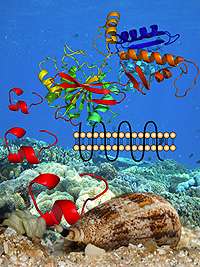
(PhysOrg.com) -- Better chronic pain relief could be possible in the future, according to research announced today by scientists at UQ's Queensland Brain Institute.
Neuropathic and chronic pain is typically caused by injury to the nerves, resulting in uncontrolled activation of pain pathways, and affects one in five Australians of working age.
Neuroscientists at QBI have revealed that a toxin produced by a lethal cone snail acts on a newly identified target and cell signalling pathway that may play a critical role in regulating chronic pain.
Professor David Adams and his team have identified specific peptides in the cone shell toxin that may serve as the molecular framework for novel “designer” conotoxins.
“For several years, it's been known that the remarkable properties of cone shell toxins (conotoxins) hold tremendous promise for chronic pain sufferers, and drugs that can combat or alleviate pain are a holy grail in drug discovery,” Professor Adams said.
The venom of Conus snails – marine animals found in several of the world's oceans – is currently the subject of extensive scientific investigation because its powerful analgesic properties are thought to offer several distinct advantages over traditional therapeutic treatments for neuropathic pain.
According to Professor Adams, the prevailing scientific view until now has been that conotoxins only targeted one group of pain receptors.
However, in a paper published in the prestigious Journal of Neuroscience, Professor Adams, along with Professor David Craik (UQ's Institute for Molecular Bioscience) and colleagues have described a surprising new way of inhibiting pain sensors using mini-proteins commonly found in cone snail venoms.
The paper invites scientists around the world to reconsider the conventional model for how conotoxins act on target cells such as sensory neurons, opening up what could be a paradigm shift in the development of conotoxin-based therapeutics and analgesics.
The scientific paper “Analgesic a-conotoxins inhibits N-type calcium channels in rat sensory sensory neurons via GABAB receptors” will be published in the Journal of Neuroscience on October 23.
Provided by UQ


