Germany backtracks on sprouts as E. coli source
(AP) -- First they pointed a finger at Spanish cucumbers. Then they cast suspicion on sprouts from Germany. Now German officials appear dumbfounded as to the source of the deadliest E. coli outbreak in modern history, and one U.S. expert called the investigation a "disaster."
Backtracking for the second time in a week, officials Monday said preliminary tests have found no evidence that vegetable sprouts from an organic farm in northern Germany were to blame.
The surprise U-turn came only a day after the same state agency, Lower Saxony's agriculture ministry, held a news conference to announce that the sprouts appeared to be the culprit in the outbreak that has killed 22 people and sickened more than 2,330 others across Europe, most of them in Germany, over the past month.
Andreas Hensel, head of Germany's Federal Institute for Risk Assessment, warned, "We have to be clear on this: Maybe we won't be able anymore to identify the source."
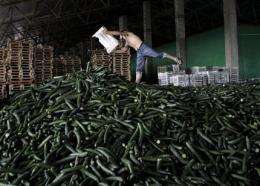
Last week, German officials pointed to tainted cucumbers from Spain as a possible cause, igniting vegetable bans and heated protests from Spanish farmers, who suffered heavy financial losses. Researchers later concluded the Spanish cucumbers were contaminated with a different strain of E. coli.
"This investigation has been a disaster," Michael Osterholm, director of the Center for Infectious Disease Research and Policy at the University of Minnesota, told The Associated Press.
"This kind of wishy-washy response is incompetent," he said, accusing German authorities of casting suspicion on cucumbers and sprouts without firm data.
The European Union's health Commissioner defended German investigators, saying they were under extreme pressure as the crisis unfolded.
"We have to understand that people in certain situations do have a responsibility to inform their citizens as soon as possible of any danger that could exist to them," John Dalli said in Brussels.
In outbreaks, it is not unusual for certain foods to be suspected at first, then ruled out.
In 2008 in the U.S., raw tomatoes were initially implicated in a nationwide salmonella outbreak. Consumers shunned tomatoes, costing the tomato industry millions. Weeks later, jalapeno peppers grown in Mexico were determined to be the cause.
In 2006, lab tests mistakenly pointed to green onions in an E. coli outbreak at Taco Bell restaurants in the U.S. Investigators considered cheddar cheese and ground beef as the source before settling on lettuce.
With the culprit in the European crisis still a mystery, authorities stopped short of giving sprouts a clean bill of health. German Agriculture Minister Ilse Aigner reiterated the warning against eating sprouts, as well as tomatoes, cucumbers and lettuce, which have also come under suspicion.
The agriculture ministry for Lower-Saxony state said 23 samples from the organic sprouts farm tested negative for the highly aggressive, "super-toxic" strain of E. coli that is killing people, with tests on 17 more samples still under way.
"A conclusion of the investigations and a clarification of the contamination's origin is not expected in the short term," the ministry said.
However, the negative test results do not mean that previous sprout batches weren't contaminated.
"Contaminated food could have been completely processed and sold by now," ministry spokeswoman Natascha Manski said.
In that case, the number of people stricken might keep rising for at least another week as the produce that could be causing the infections may have already been delivered to restaurants and grocery stores.
More than 630 of the victims are hospitalized with a rare, serious complication that can lead to kidney failure.
In a major difference from other E. coli outbreaks, women - who tend to eat more fresh produce - are by far the most affected this time, said Germany's national disease control center, the Robert Koch Institute. The majority of them are between 20 and 50 years old and tend to be highly educated, very fit, and lead healthy lifestyles, Friedrich Hagenmueller of Asklepios Hospital in Hamburg said.
"What do they have in common: They are thin, clean, pictures of health," he said.
Ulrike Seinsche is one of the women diagnosed with the serious complication that can lead to kidney failure.
"I really got scared when the blood results came and were so bad and the doctors became hectic," she said from her hospital bed in Hamburg.She was quickly transferred into intensive care, got cramps and suffered "real death fear," she said. "Now, I'm actually stable."
Osterholm, whose team has investigated a number of foodborne outbreaks in the U.S., said authorities should trace foods back to their suppliers - which is exactly what led German officials to single out the sprout producer, linking it to several restaurants where more than 50 people fell ill.
Since 1996, about 30 outbreaks of foodborne illness in the U.S. have been linked to raw or lightly cooked sprouts. Sprouts were also implicated a 1996 E. coli outbreak in Japan that killed 12 people and reportedly sickened more than 9,000.
At an EU health ministers meeting Monday in Luxembourg, Germany defended itself against accusations it had acted prematurely in pointing to Spanish cucumbers.
"The virus is so aggressive that we had to check every track," said Health State Secretary Annette Widmann-Mauz.
The EU will hold an emergency meeting of farm ministers Tuesday to address the crisis, including a ban imposed by Russia on all EU vegetables.
©2011 The Associated Press. All rights reserved. This material may not be published, broadcast, rewritten or redistributed.


