Transcatheter aortic valve implantation as good as traditional surgery for high risk, operable patients
April 5, 2011

TAVI as good as traditional surgery for high risk, operable patients

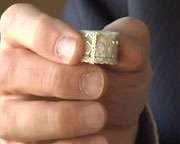
The valve used in TAVI surgery.

Just released data from a clinical trial shows continued promise for a new minimally invasive treatment option for patients with severe aortic stenosis. New research presented at the 2011 American College of Cardiology (ACC) Scientific Sessions from the first arm, Cohort A, of the Placement of Aortic Transcatheter Valves (PARTNER) Trial shows that transcatheter aortic valve implantation (TAVI) is as good as traditional open heart surgery for high-risk, but operable patients. The Hospital of the University of Pennsylvania (HUP) is a participating site for the trial.

Speaking at the meeting as part of the panel presenting the data, Howard C. Herrmann, MD, director of the Interventional Cardiology and Cardiac Catheterization Laboratories at Penn, said “The results are a win-win for patients. Surgery was better than expected and TAVI was even better at 30 days and as good as surgery at one year. High risk patients with this common life threatening disease will likely soon have a less invasive alternative to . I anticipate that the results of TAVI will only get better with experience and further improvements in the technology.”

Cohort A compared outcomes after treatment with either the TAVI procedure or traditional open-heart surgery in 699 high-risk, operable patients. The study is a "non-inferiority" trial designed to evaluate whether patient outcomes after transcatheter replacement are comparable to surgical outcomes in these patients.

Researchers at the meeting cautioned that although the study met its primary endpoint of demonstrating non-inferiority to traditional surgery, major strokes and other vascular complications were higher in the TAVI-treated patients, both at 30 days and one year. By contrast, major bleeding was more than twice as common in the surgical group.

The PARTNER Trial is a randomized, controlled pivotal trial of a transcatheter aortic heart valve – a collapsible and balloon-expandable valve that can be introduced into the body via a catheter-based delivery system. The valve replaces a patient’s diseased valve without traditional open-heart surgery and while the patient’s heart continues to beat. The trial is studying the valve in both operable (Cohort A) and inoperable (Cohort B) patients with severe aortic stenosis.

Previous results from the trial indicated that this therapeutic option was viable for patients too sick to undergo traditional open-heart surgery (Cohort B). As compared to standard medical therapy, the new procedure, transcatheter aortic valve implantation significantly reduced mortality rates in the patients who received the new valve.

Provided by University of Pennsylvania School of Medicine search and more info website


Rank 3 /5 (1 vote)
Relevant PhysicsForums posts

More news stories

Keep food safety in mind this memorial day weekend

(HealthDay) -- Picnics, parades and cookouts are as much a part of Memorial Day weekend as tributes to the United States' war veterans.

Medicine & Health / Health

created 10 hours ago | popularity not rated yet | comments 0

Family history of Alzheimer's affects functional connectivity

(HealthDay) -- Cognitively normal individuals with a family history of late-onset Alzheimer's disease (AD) may display lower resting state functional connectivity in the default mode network (DMN) of the brain, ...

Medicine & Health / Alzheimer's disease & dementia

created 19 hours ago | popularity not rated yet | comments 0

Transvaginal mesh op restores pelvic organ prolapse at price

(HealthDay) -- Transvaginal mesh (TVM) procedures are effective for anatomical restoration of pelvic organ prolapse (POP), but patients report a worsening of sexual function following surgery, according to ...

Medicine & Health / Other

created 19 hours ago | popularity not rated yet | comments 0

Travel to high altitudes tied to Crohn's, colitis flare-ups

(HealthDay) -- People with inflammatory bowel disease, which includes Crohn's disease and colitis, may be at increased risk for flare-ups when they fly or travel to high altitudes for skiing or mountain climbing, ...

Medicine & Health / Inflammatory disorders

created 20 hours ago | popularity not rated yet | comments 1 | with audio podcast

Weight struggles? Blame new neurons in your hypothalamus

New nerve cells formed in a select part of the brain could hold considerable sway over how much you eat and consequently weigh, new animal research by Johns Hopkins scientists suggests in a study published in the May issue ...

Medicine & Health / Neuroscience

created May 21, 2012 | popularity 5 / 5 (1) | comments 6 | with audio podcast


Scientist: Evolution debate will soon be history

(AP) -- Richard Leakey predicts skepticism over evolution will soon be history. Not that the avowed atheist has any doubts himself.

Dell tablet leak: 10.1-inch display, two-battery choice

(Phys.org) -- Headline after headline talks about vendors’ tablets in the wings as likely number-one contenders for the iPad. Such claims have justifiably been taken with a grain of salt, considering ...

SpotterRF debuts Radar Backpack Kit (w/ Video)

(Phys.org) -- SpotterRF has announced a special radar backpack kit designed to enhance situational awareness for soldiers on the ground. The company says its special radar is designed for warfighters as part ...

SpaceX capsule has 'new car' smell, astronauts say (Update)

SpaceX's Dragon cargo vessel smells like a new car, said astronauts at the International Space Station after opening the hatches Saturday following the spacecraft's landmark mission to the orbiting lab.

Thousands of shellfish found dead in Peru

Thousands of crustaceans were found dead off the coast of Lima following the mystery mass death of dolphins and pelicans, the Peruvian Navy said Friday.

Astronomers seize last chance in lifetime for Venus Transit

Astronomers are gearing for one the rarest events in the Solar System: an alignment of Earth, Venus and the Sun that will not be seen for another 105 years.