New insights for a therapeutic approach in glioblastoma
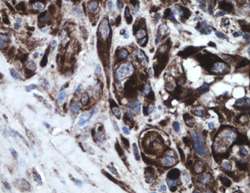
(PhysOrg.com) -- Scientists from the Friedrich Miescher Institute for Biomedical Research have identified a new and important molecular player in glioblastoma. The amount of the MNK1 kinase is not only dramatically increased in this devastating brain tumor, but its inhibition reduces cell proliferation and substantially sensitizes glioma cells to rapamycin. MNK1 controls the production of cancer related proteins, in particular those highly activated in malignant tumors. Their results are published today in Cancer Research.
Glioblastoma multiforme (GBM) is one of the most deadly brain tumors; current treatment regimes can only abate the symptoms and prolong life for just one year. Scientists in Brian Hemmings' group at the Friedrich Miescher Institute for Biomedical Research together with colleagues from the University Hospital Basel have now identified and characterized a signaling pathway with therapeutic implications for deadly brain tumors.
MNK1, or in full MAP kinase-interacting kinase 1, is a signaling molecule regulating other proteins by phosphorylation. In a study published online in Cancer Research, the FMI scientists found large amounts of the MNK1 protein in brain tumors. Furthermore, the study showed that MNK1 inactivation reduced glioma cell growth. Finally, treatment with the MNK1 inhibitory compound CGP57380 (Novartis) together with rapamycin had a strong and additive cytostatic effect.
To further characterize the role of MNK1 in glioblastoma, the scientists analyzed MNK1-regulated events. MNK1 can associate with the translation machinery and regulates factors involved in protein synthesis via phosphorylation. Importantly, the cancer biologists identified a MNK1 signaling cascade that controls translation of cancer-related RNAs including SMAD2, a key component of the TGFß-signaling pathway, which is thought to play a crucial role in tumor malignancy. The study offers new insights into how MNK1 pathways contribute to brain tumour progression and recommends MNK1-controlled translational pathways for targeted strategies to more effectively treat glioblastoma.
"We believe that dissecting glioma signaling networks will not only explain principles underlying gliomagenesis or treatment resistance, but it will also propose novel molecular strategies for effective therapy." says Michal Grzmil, postdoctoral researcher in Brian Hemmings' laboratory and first author of the publication. "This is not to say that a treatment for glioblastoma is just around the corner. What we have done is the basic characterization of what we believe is an important signaling pathway in glioblastoma."
More information: Grzmil M, et al. (2011). MAP kinase-interacting kinase 1 (MNK1) regulates SMAD2-dependent TGFß singaling pathway in human glioblastoma. Cancer Res 71:2392. cancerres.aacrjournals.org/con … t/71/6/2392.abstract


