Investigators discover enzyme essential for healthy lung development
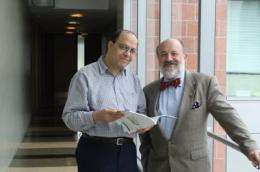
Investigators at The Saban Research Institute of Children's Hospital Los Angeles have provided the first evidence that Eya1 protein phosphatase is a crucial regulator of the development of embryonic lung epithelial stem cells.
The correct functioning of lung epithelium is essential to life. Cellular polarity of lung epithelial cells, meaning that they have an asymmetrical orientation or a front and back, is crucial. Dysregulation of cell polarity has been associated with developmental disorders as well as cancer. Until now, little has been known about the mechanism that controls cell polarity, cell fate and self-renewal of embryonic lung epithelial stem cells. David Warburton, MD, director of Developmental Biology and Regenerative Medicine at The Saban Research Institute, and Ahmed El-Hashash, PhD, senior research scientist carrying out this study, will release their findings in the upcoming issue of Development.
"We know that loss of polarity in pulmonary epithelial cells is associated with lung cancer and chronic obstructive pulmonary disease. Knowing that Eya1 regulates polarity, we now have another target for intervening in those disease processes," said Dr. Warburton.
They have determined that Eya1, a protein phosphatase, controls cell polarity, cell fate and self-renewal in the mouse embryonic lung epithelial stem cells. They have also provided the first evidence that these stem cells are polarized with characteristic perpendicular cell divisions.
In vivo and in vitro experiments showed that interfering with Eya1 phosphatase function resulted in defective epithelial cell polarity and mitotic spindle orientation; disrupted Numb, a cell fate determinant; and inactivated Notch signaling, which is involved in cell segregation and division, thereby establishing Eya1 as an important regulator in the development of embryonic lung stem cells.
"Identification of Eya1 mechanisms of regulating cell polarity, cell fate and self-renewal, will help to harness the regenerative potential of lung stem cells, and to identify novel targets for the prevention or rescue therapy of fatal lung disease, and for lung regeneration. This will also help to develop stem cell-based therapy to treat patients with lung diseases, " said Dr. El-Hashash, PhD. "Solutions to the problems concerning regeneration of lung tissue for restoration of functional alveoli are at the cutting edge of identifying novel therapeutic options for lung diseases like COPD and fibrosis."


