Trial and error: The brain learns from mistakes
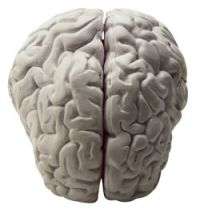
In the developing brain, countless nerve connections are made which turn out to be inappropriate and as a result must eventually be removed. The process of establishing a neuronal network does not always prove precise or error free. Dr. Peter Scheiffele's research group at the Biozentrum of the University of Basel have been able to document this phenomenon using advanced microscopy techniques in the developing cerebellum, a brain area required for fine movement control.
Dr. Scheiffele's group has discovered that a protein traditionally associated with bone development is responsible for correcting errors while neurons connect to their correct partners in the cerebellum. Their results will be published next week in the online, open access journal PLoS Biology.
The brain is a highly complex set of neuronal networks, in which thousands of different neuron types establish neuronal connections, called synapses, with other neurons. To establish these synapses, neurons send out axons from their cell bodies, which are fiber like extensions that extend into the various regions of the brain. Each neuron must connect with particular partner neurons during brain development, and it is this precise specificity which allows different circuits and different brain regions to serve different functions.
The cerebellum, for example, has very precise connectivity that allows the brain to use sensory information (input) and convert it into an exact motor response (output). There are a number of cell types in the cerebellum, two of which are Purkinje cells and granule cells. Mossy fibers are a group of inputs in the cerebellum, which make synaptic connections only with granule cells.
In their study, however, Dr. Scheiffele's group have now been able to demonstrate that these mossy fiber inputs often connect with Purkinje neurons during early brain development, in addition to granule cells. These incorrect Purkinje connections are then subsequently eliminated within a week, establishing proper specificity in the cerebellum. They also find that Bone morphogenetic protein 4 (BMP4) helps correct these initial errors. Originally, BMP4 was linked with the specialization of cells during osteogenesis. That this protein is also responsible for the stability and removal of neuronal connections was not previously known.
"If inappropriate connections between neurons are not subsequently eliminated, this can lead to substantial disturbances in the brain. Autism could also be linked to this form of failure to correct errors," explains Scheiffele. The research group at the Biozentrum used a genetic mouse model to make their observations. With the help of a fluorescent protein, the different nerve connections could be stained and made visible by an advanced imaging technique that combines light microscopy with electron microscopy. This allowed multiple types of changes in connectivity to be traced. "These processes can be applied to the development of the human brain and could play an important role in further brain research," added Scheiffele.
The brain undergoes drastic changes during its early life. While the neuronal connections in the brain of a newborn are still relatively unspecific, the selectivity of the synapses steadily increases. The question of what advantage these short-lived, inappropriate connections serve during brain development will become a major focus of Dr. Scheiffele's future research, in addition to their potential implications for neurological disorders such as autism, schizophrenia, and epilepsy.
More information: Kalinovsky A, Boukhtouche F, Blazeski R, Bornmann C, Suzuki N, et al. (2011) Development of Axon-Target Specificity of Ponto-Cerebellar Afferents. PLoS Biol 9(2): e1001013. doi:10.1371/journal.pbio.1001013
Provided by
Public Library of Science
-
From lemons to lemonade: Reaction uses carbon dioxide to make carbon-based semiconductor,
30 comments
-
Thioridazine kills cancer stem cells in human while avoiding toxic side-effects of conventional cancer treatments,
3 comments
-
SpaceX private rocket blasts off for space station (Update),
42 comments
-
Climate scientists say they have solved riddle of rising sea,
30 comments
-
Research team claims to have found evidence Lake Cheko is impact crater for Tunguska Event,
18 comments
-
Potential Breakthrough in Seizure Control
18 hours ago
-
Popping/Cracked sternum.
22 hours ago
-
Which Mental Illness Encompasses This Problem?
23 hours ago
-
A question about drug tolerance
May 23, 2012
-
Poor nutrition leading to overeating?
May 23, 2012
-
Math and dyslexia?
May 21, 2012
- More from Physics Forums - Medical Sciences
More news stories
Keep food safety in mind this memorial day weekend
(HealthDay) -- Picnics, parades and cookouts are as much a part of Memorial Day weekend as tributes to the United States' war veterans.
3 hours ago |
not rated yet |
0
Family history of Alzheimer's affects functional connectivity
(HealthDay) -- Cognitively normal individuals with a family history of late-onset Alzheimer's disease (AD) may display lower resting state functional connectivity in the default mode network (DMN) of the brain, ...
Medicine & Health / Alzheimer's disease & dementia
12 hours ago |
not rated yet |
0
Transvaginal mesh op restores pelvic organ prolapse at price
(HealthDay) -- Transvaginal mesh (TVM) procedures are effective for anatomical restoration of pelvic organ prolapse (POP), but patients report a worsening of sexual function following surgery, according to ...
13 hours ago |
not rated yet |
0
Travel to high altitudes tied to Crohn's, colitis flare-ups
(HealthDay) -- People with inflammatory bowel disease, which includes Crohn's disease and colitis, may be at increased risk for flare-ups when they fly or travel to high altitudes for skiing or mountain climbing, ...
Medicine & Health / Inflammatory disorders
13 hours ago |
not rated yet |
1
|
Of mice and mental models: Neuroscientific implications of risk-optimized behavior in the mouse
(Medical Xpress) -- Regardless of an organism’s biological complexity, every encephalized animal continuously makes under-informed behavioral choices that can have serious consequences. Despite its ubiquity, ...
Dell tablet leak: 10.1-inch display, two-battery choice
(Phys.org) -- Headline after headline talks about vendors tablets in the wings as likely number-one contenders for the iPad. Such claims have justifiably been taken with a grain of salt, considering ...
Scientist: Evolution debate will soon be history
(AP) -- Richard Leakey predicts skepticism over evolution will soon be history. Not that the avowed atheist has any doubts himself.
SpaceX capsule has 'new car' smell, astronauts say (Update)
SpaceX's Dragon cargo vessel smells like a new car, said astronauts at the International Space Station after opening the hatches Saturday following the spacecraft's landmark mission to the orbiting lab.
SpotterRF debuts Radar Backpack Kit (w/ Video)
(Phys.org) -- SpotterRF has announced a special radar backpack kit designed to enhance situational awareness for soldiers on the ground. The company says its special radar is designed for warfighters as part ...
Thousands of shellfish found dead in Peru
Thousands of crustaceans were found dead off the coast of Lima following the mystery mass death of dolphins and pelicans, the Peruvian Navy said Friday.
Australia hails surprise super-telescope decision
Australia has hailed a surprise decision giving it a role in a radio telescope project aimed at revolutionising astronomy, vowing to draw on its decades of experience in space science.
Feb 08, 2011
Rank: not rated yet
We stumble forward, after having fallen back a bit.
Need is our motivator and comfort is our reward until we leave this world. So be it.
Feb 08, 2011
Rank: not rated yet