Researchers discover how a common virus cheats death
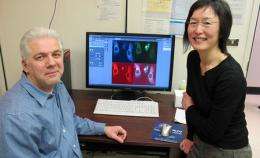
(PhysOrg.com) -- Findings could arm medical scientists with the ability to shut down many viruses at an earlier stage.
A team of researchers in the Faculty of Medicine & Dentistry at the University of Alberta has taken an important step forward in the study of virology by discovering how a common virus cheats death by allowing the viral disease to spread throughout the body.
Now the team wants to see if similar viruses work the same way. Their findings could have major implications for improving the health of millions and may prevent deaths, since this discovery could arm medical scientists with the ability to shut down many viruses at an earlier stage.
Viruses invade host cells and replicate inside them. One of the body’s immune responses is to trigger cells to “commit suicide” if they are infected or sick. However, Tom Hobman and his fellow researchers, Carolina Ilkow and Ing Swie Goping, found out how the rubella virus, responsible for German measles, blocks cell death, thereby allowing the virus to spread. Rubella virus, a type of RNA virus, is responsible for more birth defects worldwide than any other infectious agent. These viruses cause the vast majority of viral diseases in humans, including AIDS, influenza, hepatitis C, West Nile disease and Dengue fever.
Hobman’s team suspected that RNA viruses block the pathways in cells that lead to cell suicide. This was the opposite of what many scientists would have expected. The U of A research team found that when cells are infected with rubella virus, cell suicide is delayed or blocked. They also discovered that a protein, which is generally thought to function only as a building block, actually plays a key role in stopping the process that triggers cell death. This so-called “capsid” protein in the virus acts like a sponge and soaks up a protein in the cell known as Bax, which is crucial in the process triggering the cell to commit suicide.
“This discovery was surprising but gratifying at the same time,” says Hobman. “Previously, no one had given any thought to any potential function of this capsid protein.”
Hobman’s team then decided to conduct some reverse genetic experiments and mutated the capsid protein. This impaired the ability of the virus to replicate itself, because cells committed suicide much earlier in the infection process and more often.
The team’s findings have been published in the journal PLoS Pathogens.
Hobman and his colleagues are now studying the West Nile and Dengue fever viruses to see if those viruses prevent cell suicide in a similar fashion. He hopes the team’s discovery will one day lead to viral infections being limited and shut down at an earlier stage.
Hobman is an authority on host-virus interactions in cells infected with rubella and West Nile viruses. He wrote the chapter on rubella in a widely used textbook on viruses.


