Diabetes in pregnancy a risk for mom years later
(AP) -- A type of diabetes that strikes during pregnancy may disappear at birth, but it remains a big red flag for moms' future health - one that too many seem to be missing.
Roughly half of women who've had gestational diabetes - the pregnancy kind - go on to develop full-fledged Type 2 diabetes in the months to years after their child's birth.
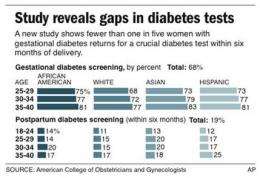
Yet new research shows fewer than one in five of those women returns for a crucial diabetes test within six months of delivery. That's the first of the checkups they're supposed to have every few years to guard against diabetes' return, but no one knows how many do.
The research, by testing-lab giant Quest Diagnostics, is sobering because if they only knew, many of these new mothers could take steps to reduce their chances of later-in-life diabetes that can bring with it such complications as heart disease and kidney damage.
"It's almost as if you got a preview . a window to the future," says Dr. Ann Albright, a diabetes specialist with the Centers for Disease Control and Prevention. "This is a population that really should be targeted for intervention."
And more mothers-to-be soon may join the ranks. The American Diabetes Association is recommending a change in how pregnant women are tested that will identify more mild cases than today, based on some recent studies that found treating even those mothers leads to easier deliveries. If obstetricians eventually sign on, it has the potential to double diagnoses - although most mild cases would need only better nutrition and exercise, not diabetes medications, the association cautions.
New CDC estimates show nearly 26 million Americans have some form of diabetes, the vast majority of them the Type 2 kind that's linked to being overweight. Tens of millions more have high enough blood sugar to be classified as pre-diabetic.
Women can have either Type 2 diabetes or the insulin-dependent Type 1 variety at the time they become pregnant. That's a separate issue, and those women are urged to have their diabetes tightly controlled to avoid a range of risks to baby and mother.
But according to the CDC, somewhere between 2 percent and 10 percent of pregnant women develop diabetes for the first time during pregnancy, the gestational type. If untreated, the mother's high blood sugar can make the fetus grow too large, leading to C-sections and early deliveries. It also can trigger a potentially life-threatening condition called preeclampsia. It even increases the baby's risk of becoming obese in childhood.
So medical groups urge screening of most pregnant women. They drink a sweetened liquid and then have blood tests to see how their body processes it.
But nearly a third of pregnant women aren't getting that test, according to the new Quest study, which examined the testing records of more than 900,000 pregnant women. The study, published in the journal Obstetrics and Gynecology, couldn't say why. For some, doctors may have decided they were at low risk. Others may not have followed their doctor's advice to get the test.
More worrisome: Usually, mom's blood sugar returns to normal a few weeks after the birth, but doctors make clear that patients need to be checked within six to 12 weeks to be sure. Quest tracked those patient records for a full six months, and found 19 percent had gotten that first postpartum check.
"The reality is that women get busy" with their new family, says Dr. Ellen Landsberger, obstetric diabetes director at New York's Montefiore Medical Center, whose clinic takes steps to track those patients down. "Women take care of their children more than themselves."
The CDC says women whose gestational diabetes disappears still need their blood sugar checked every one to three years, because they're at such high risk of developing Type 2 diabetes within the next decade or two.
That's because the body's underlying ability to process blood sugar is forever altered, says Dr. Carol Wysham of the American Diabetes Association, who heads the Rockwood Clinic diabetes center in Spokane, Wash.
The good news: For anyone at risk for Type 2 diabetes, losing a modest amount of weight - 5 percent to 7 percent of your starting pounds - and doing 2 1/2 hours of physical activity a week are proven to prevent or at least postpone it. Women who had gestational diabetes are no exception, making it especially important to shed those pregnancy pounds.
In New York, Rewatie Hussain had never heard of gestational diabetes before her first pregnancy. She was promptly treated, and while her son needed some extra care at birth, he left the hospital healthy.
Hussain's own blood sugar returned to normal that time, but gestational diabetes struck again with her second pregnancy. This time, she required insulin treatment. Her son was fine, but a few months after delivery, Hussain was diagnosed with Type 2 diabetes.
"It just never left," she says. She was able to drop the insulin for diet and oral medication, and "I'm still pretty OK. I just know to be careful and look out for it."
©2010 The Associated Press. All rights reserved. This material may not be published, broadcast, rewritten or redistributed.


