Scientists ID new cancer drug target
Suppressing cancer cells' ability to replicate damaged DNA could dramatically enhance the effectiveness of chemotherapy drugs such as cisplatin, according to a new pair of papers from MIT biologists.
In studies of mice, the researchers found that slowing down a specific system for tolerating DNA damage in cancer cells not only prolonged the lives of the mice, but also prevented relapsed tumors from becoming resistant to chemotherapy, and made tumors much less likely to spread to other parts of the body.
Two enzymes that play key roles in tumor cells’ response to DNA damage could be an enticing target for new cancer drugs, according to Michael Hemann and Graham Walker, senior authors of the two papers. Their new findings appear in the Proceedings of the National Academy of Sciences the week of Nov. 8.
“What’s promising is that there are quite a few ways one could go about finding classes of compounds that would inhibit this activity,” says Walker, an American Cancer Society Professor of Biology at MIT.
Chemotherapy tolerance
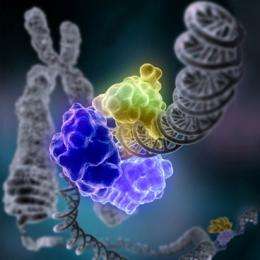
Many cancer drugs, including cisplatin, attack cancer cells by damaging their DNA. This DNA damage can prevent cells from copying their DNA, which they must do before dividing. If they can’t, they usually commit suicide. However, cancer cells can use enzymes known as translesion DNA polymerases to copy over DNA damage, allowing them to survive.
This type of DNA copying can be highly prone to mistakes, introducing mutations into the DNA. Those newly acquired mutations make cancer cells that survive chemotherapy much more drug-resistant and aggressive. This means that if the first round of chemotherapy fails to completely destroy the tumor, the patient is usually much worse off than before the treatment.
“If the tumor fails to respond to initial therapy, the likelihood of clinical success is very low upon repeated rounds of treatment,” says Hemann, an assistant professor of biology and member of the David H. Koch Institute for Integrative Cancer Research at MIT.
Biologists who study DNA repair have long known that translesion DNA polymerases can repair DNA damage, so it was a logical guess that the enzymes might help cancer cells overcome chemotherapy, says Walker. The effect has been seen before in human cancer cells, but these studies are the first to show it in living animals.
Prolonged survival
The new PNAS studies focused on two proteins, known as Rev3 and Rev1, which are subunits of translesion DNA polymerases.
In one of the papers, Hemann and Walker studied mice with a particularly aggressive form of lung cancer. Among mice treated with cisplatin, mice whose Rev3 levels were reduced by 60 to 70 percent lived twice as long as mice with the normal amount of Rev3. (Mice with reduced Rev3 lived an average of 22.5 days following cisplatin treatment; mice treated with cisplatin alone lived 11 days.) This is the first time researchers have been able to make these aggressive tumors vulnerable to front-line chemotherapy in mice.
In the second study, the researchers treated mice with lymphoma with the drug cyclophosphamide. At first, the drug was effective in mice whose tumors had normal and reduced Rev1 levels, but in both groups, tumors reappeared after about two weeks. This is similar to the relapse that frequently occurs during the treatment of human cancers.
Those relapsed tumors were then transplanted into a second group of mice. In the second group, drug treatment was far more effective in mice with reduced Rev1, showing that the tumors were not resistant to the drug. Those mice survived much longer — all of the mice with reduced Rev1 lived for 12 days, whereas some of the mice with normal Rev1 level tumors died in two days and only 40 percent lived for 12 days.
Those results suggest that even if tumors continually relapse, they would remain susceptible to repeated rounds of chemotherapy, which could potentially prolong cancer patients’ lives, says Hemann.
Looking for new drugs
The researchers’ discoveries suggest that by inhibiting translesion DNA polymerases, it might be possible to treat difficult cancers that have proven resistant to ordinary chemotherapy, and to prevent resistance from arising during treatment.
The findings confirm earlier results in human cancer cells grown in the lab, says Stephen Howell, professor of medicine at the University of California, San Diego. “We know that if we shut down this particular pathway in tumor cells, we can sensitize the tumor to chemotherapy, but how do we do that clinically?” says Howell, who was not involved in this study. “At the moment, that’s the biggest challenge.”
In the MIT studies, the researchers controlled Rev1 and Rev3 levels using a technique called RNA interference, which employs short strands of RNA to block specific genes from being expressed. Researchers are now trying to develop ways to effectively and safely use RNA interference to treat many diseases, but no such therapies have been approved.
Another option is to find molecules that would disrupt the action of these polymerase enzymes. Walker is now looking for such drugs, which might be able to shut down the translesion DNA polymerase system more thoroughly than RNA interference. He and Hemann believe that such drugs, used in combination with traditional chemotherapy, could provide a better way to treat cancers that don’t respond well to the usual treatments.
This story is republished courtesy of MIT News (web.mit.edu/newsoffice/), a popular site that covers news about MIT research, innovation and teaching.


