Chip-in-a-pill may be approved in 2012

Nov 10, 2010 by Lin Edwards report
Chip-in-a-pill may be approved in 2012
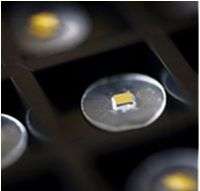
Image credit: Proteus Biomedical

(PhysOrg.com) -- Giant Swiss pharmaceutical company Novartis AG, based in Basel, is developing a pill containing an embedded microchip, which it hopes to submit for regulatory approval in Europe within 18 months. The chip is activated by the stomach acid, and transmits information to a patch attached to the patient's skin, which then sends it on to a doctor via the Internet or a smartphone.

The first application of the chip-in-a-pill -- or as it is officially known, the Ingestible Event Marker (IEM) -- is expected to be for , to help avoid . A common problem that occurs after transplant operations is the dose and timing of taking anti-rejection drugs has to be monitored and frequently adjusted to prevent rejection of the transplanted organ, such as a kidney. The would overcome this problem since it would closely monitor the patients to determine if the drugs are being taken at the right time, and in the correct dosage.

In January this year Novartis spent $24 million on securing access to the ingestible medical microchips technology, which was invented and developed by a privately-owned Californian company, Proteus Biomedical. Licensing the technology puts Novartis ahead of all its competitors. The Proteus microchip is capable of collecting a range of biometric data such as heart rate, body temperature and body movements, which may indicate if drugs are working as intended.

Spokesman Dr. Trevor Mundel, the company’s Global Head of Development, said Novartis does not expect full clinical trials of the "smart pills" will be needed because the microchips will be added to existing drugs, and the company intends to carry out bioequivalence tests instead to show the effects of the pills are unchanged by the addition of a tiny microchip.

Mundel said the regulators had been encouraging and like the concept, but “they want to understand” how patients’ privacy will be protected in a system in which information is transmitted via wireless or Bluetooth technology from inside their bodies, and which could presumably therefore be intercepted by someone other than the doctor for whom it was intended.

Mr Mundel said the first application for the technology would be for anti-rejection drugs for transplant patients, but added he sees "the promise as going much beyond that."

Explore further: New sleeping pill poised to hit US markets

Related Stories

Blood test could show transplant rejection

Dec 25, 2006

A blood test may replace invasive biopsies that heart transplant patients in the United States and elsewhere undergo to check for rejection, heart experts say.

Recommended for you

New sleeping pill poised to hit US markets

16 hours ago

An experimental sleeping pill from US drug company Merck is effective at helping people fall and stay asleep, according to reviewers at the US Food and Drug Administration, which could soon approve the new drug.

Global recommendations on child medicine

17 hours ago

Transparent information on the evidence supporting global recommendations on paediatric medicines should be easily accessible in order to help policy makers decides on what drugs to include in their national drug lists, according ...

FDA has safety concerns on Merck insomnia drug

May 20, 2013

Federal health regulators say an experimental insomnia drug from Merck can help patients fall asleep, but it also carries worrisome side effects, including daytime drowsiness and suicidal thinking.

User comments : 10

Adjust slider to filter visible comments by rank

Display comments: newest first

Simonsez
5 / 5 (3) Nov 10, 2010
Mr Mundel said the first application for the technology would be for anti-rejection drugs for transplant patients, but added he sees "the promise as going much beyond that."

Is that statement supposed to quell my orwellian fears?
JimB135
5 / 5 (6) Nov 10, 2010

Is that statement supposed to quell my orwellian fears?


Simon! Your patch says you didn't take your medicine this morning. Now pipe down and take your pills.
El_Nose
5 / 5 (4) Nov 10, 2010
well if you understand the digestive system then you will realize that this chips is in your body for a very brief period of time -- so have no fear, unless your constipated. :-)
Ravenrant
not rated yet Nov 10, 2010
Sounds good to me as long as it has fiber and no viruses.
Caliban
3.7 / 5 (3) Nov 10, 2010
On the face of it, a good idea, but, looking a little deeper, this somewhat disincentivizes the push to develop cloned replacement organs. Chip-in-a-pill reduces the (immediate) need for clone/culture, and keeps the market for medication and constant patient monitoring intact whether transplantation is involved or not. Gotta keep the wheels on the gravy train!!

DamienS
5 / 5 (2) Nov 10, 2010
"they want to understand” how patients’ privacy will be protected in a system in which information is transmitted via wireless or Bluetooth technology from inside their bodies, and which could presumably therefore be intercepted by someone other than the doctor for whom it was intended.

Encryption.
HealingMindN
not rated yet Nov 10, 2010
What about for the next step we inject people with smart dust that can be read from any WiFi or 3G network? The smart dust can also arrange itself on people's skin, so it looks really cool like circuit board patterns.
stealthc
1 / 5 (1) Nov 11, 2010
bad idea, I won't ever get chipped even if it comes in a happy looking pill. LMAO. So then I'm sure they will try sneaking them into my food supply...

You ate Shreddies for breakfast and had a glass of orange juice! Oh by the way you forgot to take your lithium on saturday!

These people for suggesting the idea and insisting that we look away from the obvious privacy concerns really are wolves in sheep's clothing, don't fall for it.
YSLGuru
2 / 5 (2) Nov 12, 2010

Is that statement supposed to quell my orwellian fears?


Excellent Work citizen JimB135. During a routine scan of the forums we came across your above reply to one of non-conformists.

As always the State greatly appreciates your efforts in our ongoing effort to fight hate speech & thought crimes and ensure the safety and mental well-being of the populace. Recent actions on the behalf of so-called libertarians and freedom fighters has set back our cause by several years.

-REMINDER-
All citizens in Zones B1 - B4 regardless of age should report this weekend for their monthly flu vaccinations. Non-compliance with voluntary vaccinations will be swiftly dealt with. We cannot let the independent thinking of a few harm the harmony of the many.

Thank you for your patriotic duty to the state,

Sincerely,

Secretary General
Zone B4 (North American Grid)

“The State is Mother”
“The State is Father”
“The State is Savior”
“Long Live the State”
Inflaton
not rated yet Nov 13, 2010
It's great that this sort of technology is finally becoming reality, but the advent of fully developed organ cloning would get rid of the need for anti rejection drugs entirely.

More news stories

Study finds COPD is over-diagnosed among uninsured patients

More than 40 percent of patients being treated for COPD at a federally funded clinic did not have the disease, researchers found after evaluating the patients with spirometry, the diagnostic "gold standard" for chronic obstructive ...

Registry questions superiority of bivalirudin over heparin

Results from a large observational study reported at EuroPCR 2013 today question whether bivalirudin is superior to heparin in the absence of GPIIb/IIIa blockade, showing similar 30-day mortality in patients with non-ST segment ...

New blood-thinner measures may cut medication errors

Blood thinners are the preferred treatment option to prevent heart attacks, blood clots and stroke, but they are not without risk, and not just because of their side effects. These high-risk drugs, known as anticoagulants, ...