What makes brains of business leaders tick
November 15, 2010

What makes brains of business leaders tick

Ground-breaking research will scan the brains of influential people to explore how they make decisions, using often complex and conflicting information.

The University of Reading's John Madejski Centre for Reputation, within Henley Business School, and its Centre for Integrative Neuroscience and Neurodynamics (CINN)) are working together to examine what sets leaders apart and how they make their judgements. The research will be used to help business leaders make better decisions.

The study will look at functional systems in the brain that are associated with and support decision-making and strategic planning. The analysis will help give an understanding of how different expert groups make decisions and how these decisions are similar or different.

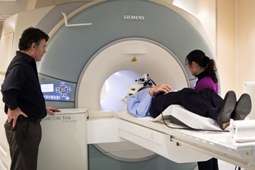
As part of the project an will be used to scan the brains of influential leaders to understand the psychological and that underpin our mental processes. The first person to be scanned is Sir John Madejski, a leading businessman in the South East. He is Chairman of Reading Football Club, as well as Chancellor of the University of Reading and Deputy Lieutenant of Berkshire.

The research is being led by Professor Douglas Saddy, Director of CINN, and Dr Kevin Money, Director of The John Madejski Centre for Reputation at Henley.

Professor Saddy said: "Psychometric and cognitive psychological tests will help reveal factors that contribute to strategic behavior. Combining these approaches will allow us to make a start on a range of outstanding questions. For example, the ability to make decisions under pressure, with incomplete, often conflicting, rapidly changing information is a key characteristic of a successful leader. How does the compute decisions under such conditions?

"We are only just starting to understand the neural systems that track the goals and intentions of others. We know even less about the systems that evaluate the outcomes of other people's decisions. Does information about the character and mental state of others influence our judgement of their decision-making success? Insights from neural and cognitive science will allow us to prepare and train decision-makers for situations in which it is essential to control, and allow, both cognitive and emotive assessment of information."

The initial project cohort will be business leaders but it is planned to broaden this out to include representatives of senior military ranks, police and emergency services.

Dr. Money said: "We are interested in situations and conditions where leaders may make decisions that will benefit society as well as conditions in which leaders may be in danger of making biased or self-serving decisions. This research will help us explore these and look for solutions to these problems.

"One thing we would like to explore, for example, is whether there are differences between business leaders and military leaders in how they make decisions and if there are any implications for business and military education.

"We already have some insights on how leaders balance the rights of stakeholders with risks and benefits of decision-making. In a military context this would involve an investigation of how leaders balance rights of individual citizens with the safety of larger groups. In business we would investigate how the needs and rights of multiple stakeholders are balanced with decisions to create shareholder value and financial performance.

Sir John Madejski said he was delighted to be leading the way in the innovative research. "It's going to be fascinating to see what the project reveals about not just my own thinking processes but those of other businessmen and women. Making tough decisions is part of our job but that doesn't mean we always get it right - research that can help improve our business skills is invaluable."

The study marks the start of a novel partnership between a business school and a neuroscience centre, using the strengths of both to produce innovative research.

Provided by University of Reading

Filter


Move the slider to adjust rank threshold, so that you can hide some of the comments.


Display comments: newest first

Squirrel
Nov 16, 2010

Rank: not rated yet
Most decisions whether in government, business, or the military are best not made by individuals but groups organized to optimize the decision making process. We need as a society to wake out of our collective fetish that we need to be leader run.
Rank not rated yet
Relevant PhysicsForums posts
  • A question about drug tolerance
    createdMay 23, 2012
  • Poor nutrition leading to overeating?
    createdMay 23, 2012
  • Math and dyslexia?
    createdMay 21, 2012
  • portable metabolism meter?
    createdMay 21, 2012
  • Rare medical conditions on 20/20 tonight
    createdMay 18, 2012
  • "Good" Cholesterol in Doubt
    createdMay 17, 2012
  • More from Physics Forums - Medical Sciences

More news stories

First study to suggest that the immune system may protect against Alzheimer's changes in humans

Recent work in mice suggested that the immune system is involved in removing beta-amyloid, the main Alzheimer's-causing substance in the brain. Researchers have now shown for the first time that this may apply in humans.

Medicine & Health / Alzheimer's disease & dementia

created 21 minutes ago | popularity not rated yet | comments 0 | with audio podcast

Phone contact with nurses linked with better outcomes for women with gestational diabetes

Among women with gestational diabetes mellitus, referral to a telephone-based nurse management program was associated with lower risk of high baby birth weight and increased postpartum glucose testing, according to Kaiser ...

Medicine & Health / Obstetrics & gynaecology

created 29 minutes ago | popularity not rated yet | comments 0

Physicians definitively links irritable bowel syndrome and bacteria in gut

An overgrowth of bacteria in the gut has been definitively linked to Irritable Bowel Syndrome in the results of a new Cedars-Sinai study which used cultures from the small intestine. This is the first study to use this "gold ...

Medicine & Health / Diseases, Conditions, Syndromes

created 27 minutes ago | popularity not rated yet | comments 0 | with audio podcast

WHO target to cut early chronic illness deaths

The World Health Organization announced on Friday it was set to approve a new target to reduce premature deaths from chronic illnesses such as heart disease by a quarter by 2025.

Medicine & Health / Health

created 8 minutes ago | popularity not rated yet | comments 0

Of mice and mental models: Neuroscientific implications of risk-optimized behavior in the mouse

(Medical Xpress) -- Regardless of an organism’s biological complexity, every encephalized animal continuously makes under-informed behavioral choices that can have serious consequences. Despite its ubiquity, ...

Medicine & Health / Neuroscience

created 1 hour ago | popularity not rated yet | comments 0 | with audio podcast feature


MIT researchers devise new means to synchronize a group of robots (w/ Video)

(Phys.org) -- For several years, roboticists have been working out ways to get a group of robots to perform synchronized activities as demonstrated most often in dance routines. It’s not just about trying ...

A new invading sea crab reaches the Ebro Delta

Originally endemic to the Atlantic Coast of North America, over the past 30 years Dyspanopeus sayi has been involuntarily introduced in the UK, France, the Netherlands, the Black Sea and the Adriatic Sea. A ...

Nanotechnology for solar energy conversion systems

EU researchers extensively characterised the self-organisation of nanotubes and developed novel compositions particularly appropriate to solar energy conversion applications.

Managing biodiversity data from local government

Local governments around the world have a new tool to help share and use vast amounts of biodiversity knowledge collected in the course of their work.

Researchers demonstrate possible primitive mechanism of chemical info self-replication

(Phys.org) -- When scientists think about the replication of information in chemistry, they usually have in mind something akin to what happens in living organisms when DNA gets copied: a double-stranded molecule ...

Landmark calculation clears the way to answering how matter is formed

(Phys.org) -- An international collaboration of scientists, including Thomas Blum, associate professor of physics, is reporting in landmark detail the decay process of a subatomic particle called a kaon – ...